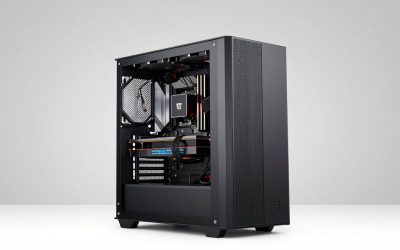
Once Human is an open-world survival game with a distinctive supernatural setting, base building and multiplayer servers. Like most modern survival titles it mixes a detailed open world with base and creature simulation, so a balanced build with a capable CPU and a mid-range GPU keeps both exploration and busy bases smooth.
As an Amazon Associate we earn from qualifying purchases at no extra cost to you.


Our Top Picks
 CORSAIR 7000D Airflow Full-Tower ATX PC Case7000 Series21.65 x 9.76 x 23.62 inches41.23 poundsCheck on Amazon


Top 3 picks at a glance
What Once Human asks of your machine
The open world and its effects lean on the GPU, while base building, crafting and the many entities on a populated server add CPU load. Busy areas and developed bases are the heaviest moments, but a solid mid-range machine handles them without needing top-tier parts.
A modern 6 to 8 core CPU covers the simulation, 16GB of RAM is the floor with 32GB better for long sessions and hosting, and a 60 or 70-class GPU suits 1080p or 1440p. A fast SSD keeps the large world streaming without hitches.
Recommended build tiers
Aim for a balanced machine sized to your resolution, with extra CPU and RAM headroom if you play on busy servers.
| Budget band | CPU | GPU | RAM | Target performance |
|---|---|---|---|---|
| $900-1,100 | Modern 6-core | Current 60-class, 8GB+ | 16GB DDR5-6000 | 1080p high settings, smooth |
| $1,300-1,600 | Modern 8-core | Current 70-class, 12GB | 32GB DDR5-6000 | 1440p high settings, busy servers |
| $2,000+ | High-end 8-core | Current 70/80-class, 12GB+ | 32GB DDR5-6000 | 1440p/4K high with large bases |
1080p survivor rig
A modern 6-core and a 60-class card run Once Human at 1080p high settings smoothly. At $900 to $1,100 it handles exploration and base building well, with 16GB of RAM as the starting point.
1440p server rig
A modern 8-core, a 70-class 12GB GPU and 32GB of RAM keep 1440p smooth on busy servers with lots of players and entities. The extra cores and memory are what carry populated areas.
Big-base rig
A high-end 8-core with 32GB of RAM and a 70 or 80-class card holds up with large bases and dense server areas at 1440p or 4K. The CPU carries the simulation while the GPU renders the world.
Where to spend and where to save
Spend a little extra on the CPU and 32GB of RAM if you play on busy servers or build large bases, because populated areas and base simulation add real processor and memory load. Those parts keep frame rate up where a crowded server would otherwise stutter.
Save on the GPU with a 60 or 70-class card sized to your resolution, since the open world runs well without a flagship. Redirect savings to memory and a fast SSD, which the large streaming world and long multiplayer sessions benefit from more than a higher graphics tier.
Keeping busy areas smooth
If frame rate dips on a populated server or at a large base, the CPU handling all those entities is often the cause, so a stronger processor and rated-speed RAM help most. Effect and foliage settings are the easiest to trim for more frames.
Enable an upscaler in quality mode for extra frames at higher resolutions, keep the game on an SSD for smooth streaming, and give it 32GB of RAM for long sessions. A modern 8-core CPU is the safer choice for busy servers.
Frequently asked questions
Is Once Human demanding?
Moderately. It is a typical modern survival game where the open world uses the GPU and base and server simulation add CPU load. A balanced mid-range build handles it well at 1080p or 1440p.
Does Once Human need 32GB of RAM?
16GB runs it, but 32GB is better for long sessions and busy multiplayer servers, giving the game headroom when many players, entities and a developed base are all active at once.
Does Once Human run better with more RAM?
On busy servers and with large bases, yes. 32GB gives the game headroom when many players, entities and a developed base are active at once, reducing the stutter that 16GB can show in the busiest areas.
Bottom line
For Once Human, build balanced with an eye on multiplayer: a modern 6 to 8 core CPU, a 60 or 70-class GPU for your resolution, 16 to 32GB of DDR5 and a fast SSD. Add CPU and memory headroom for busy servers, and the game stays smooth from solo exploration to a crowded base.