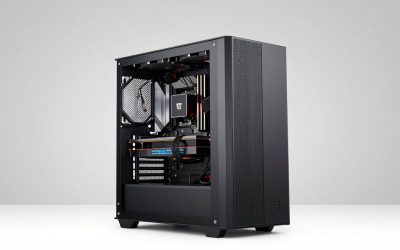
Apex Legends is a fast, movement-heavy battle royale where a high, stable frame rate directly improves your tracking and reactions. Targeting 240fps for a 240Hz monitor means building around a fast CPU and a capable mid-range GPU, with settings tuned for consistency rather than maximum fidelity.
As an Amazon Associate we earn from qualifying purchases at no extra cost to you.



Our Top Picks
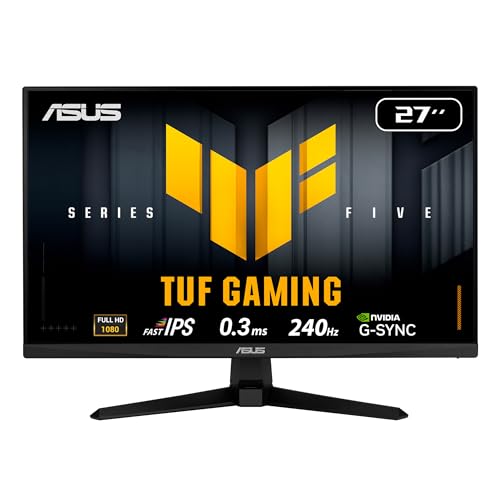
 ASUS ROG XG27AQDMGR 27 Inch 1440p 240Hz Glossy14.5" x 23.8" x 2.5"7.4 x 23.8 x 19.7 inches14.6 PoundsCheck on Amazon


Top 3 picks at a glance
What it takes to hold 240fps
Apex is well optimised but its frame rate at competitive settings is often CPU-limited, especially in busy final circles where many players and abilities overlap. A modern high-clock 6 to 8 core CPU is what keeps you near 240fps when it matters most.
A 60-class GPU handles 1080p competitive settings at high frame rates, while a 70-class card is better for 1440p 240fps. The game has an engine frame cap you can raise, and 16GB of RAM is enough, with 32GB useful if you stream.
Recommended build tiers
Balance a fast CPU with a mid-range GPU sized to your resolution, and tune for stable frames in the final circle.
| Budget band | CPU | GPU | RAM | Target performance |
|---|---|---|---|---|
| $950-1,150 | Modern 6-core | Current 60-class, 8GB+ | 16GB DDR5-6000 | 1080p 200-240fps competitive settings |
| $1,350-1,650 | Modern 8-core | Current 70-class, 12GB | 32GB DDR5-6000 | 1440p 200-240fps high settings |
| $2,000+ | High-end 8-core | Current 80-class, 16GB | 32GB DDR5-6000 | 1440p 240fps+ or 4K high refresh |
1080p 240Hz rig
A modern 6-core and a 60-class card push 200 to 240fps at 1080p competitive settings. At $950 to $1,150 it is the natural pairing with a 240Hz monitor for ranked play.
1440p high-refresh rig
A modern 8-core with a 70-class 12GB GPU holds 200 to 240fps at 1440p. The stronger CPU is what keeps frames high in chaotic end-game fights where Apex is most CPU-bound.
Flagship rig
An 80-class 16GB card and a top CPU keep 240fps+ even at 1440p max settings, or drive 4K at high refresh. A good choice if you want headroom for other demanding titles too.
Where to spend and where to save
Spend on a fast CPU and a 240Hz monitor, because Apex at high frame rates is often CPU-bound in crowded final circles and the display is what makes those frames count. A strong processor keeps frame rate up exactly when the lobby collapses and fights get chaotic.
Save on the GPU by matching it to your resolution; a 60-class card reaches 240fps at 1080p and a 70-class handles 1440p. There is no need for a flagship, so put the difference into the processor, rated-speed RAM and the high-refresh panel that turns raw frames into aim advantage.
Tuning for a competitive edge
Lower shadows, effects and volumetrics to keep frame rate stable in the final circle rather than only in open drops. In a movement shooter, steady frametimes help your aim more than a slightly higher average.
Raise the engine frame cap, enable a low-latency driver mode, and keep the game on an SSD to reduce load hitches. Run RAM at rated speed since Apex is often CPU-limited at high frame rates.
Frequently asked questions
Is Apex Legends CPU or GPU bound at high FPS?
At competitive settings and high frame rates it is frequently CPU-bound, especially in crowded end-game circles. A fast modern CPU and rated-speed RAM are essential to hold 240fps when the lobby collapses.
Can a 60-class GPU run Apex at 240fps?
Yes, at 1080p competitive settings a current 60-class card reaches 200 to 240fps. For 1440p 240fps, step up to a 70-class GPU and pair it with a strong CPU.
Why does Apex drop frames in the final circle?
Late-game circles pack many players and abilities into a small space, which is CPU-limited. A faster processor and rated-speed RAM hold frame rate there better than a graphics-card upgrade would.
Bottom line
For 240Hz Apex Legends, center the machine on a fast modern 6 to 8 core CPU, add a 60 or 70-class GPU matched to your resolution, and 16 to 32GB of DDR5. Tune settings for stable frames in the final circle, and you get the smooth, low-latency experience a movement shooter demands.