The choice between a gaming laptop and a custom desktop isn’t really about which is faster, since a desktop wins that on raw dollars. It’s about how you live with the machine. Portability, value, upgradeability, cooling and longevity all pull in different directions, and the right answer depends on whether you need to carry your gaming with you or want the most performance and lifespan for your money.
As an Amazon Associate we earn from qualifying purchases at no extra cost to you.


Our Top Picks


Top 3 picks at a glance
Where each format shines
The laptop’s case
A gaming laptop is the only option if you genuinely need portability, taking your games to a dorm, a friend’s house, or the road. It’s an all-in-one package with a built-in screen, keyboard and battery, ready to use anywhere. The trade-offs are a higher price for equivalent performance, limited upgrades, and thermal limits that cap sustained speed.
The desktop’s case
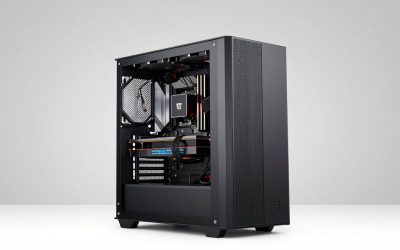
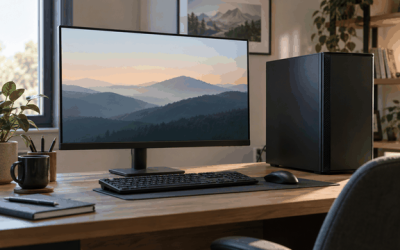
A custom desktop delivers far more performance per dollar, runs cooler and quieter under load, and lets you upgrade or repair one part at a time for years. The cost is that it stays put and you supply your own monitor and peripherals. For most people who game in one place, the desktop is the smarter long-term buy.
| Factor | Gaming laptop | Custom desktop |
|---|---|---|
| Performance per dollar | Lower | Higher |
| Portability | Excellent | None |
| Sustained performance | Thermally limited | Strong, well cooled |
| Upgradeable | Limited (RAM, storage) | Fully, part by part |
| Longevity | Shorter | Longer via upgrades |
| All-in-one | Yes, screen included | No, add peripherals |
How to decide
Buy a laptop when
Portability is a real requirement, not a nice-to-have; you lack space for a desk setup; or you want a single self-contained device. If you’ll actually carry it regularly, the premium is justified.
Build a desktop when
You game mostly in one place, want maximum performance for the money, care about quiet sustained play, or plan to upgrade over time. A desktop’s value and longevity make it the default choice for stationary gamers.
Total cost, honestly compared
Remember that a desktop’s price often excludes the monitor, keyboard and mouse a laptop includes. Factor those peripherals into the comparison. Even so, a desktop typically delivers a meaningful performance and longevity advantage at the same all-in budget, because you’re not paying the engineering premium of squeezing powerful parts into a thin, portable chassis.
Consider a hybrid approach
The choice isn’t always either-or. Some people keep a powerful desktop at home for serious sessions and a modest laptop for travel, getting the best of both without paying flagship laptop prices. If your budget allows, splitting it this way can serve mixed needs better than forcing one machine to do everything.
Whatever you choose, factor in the extras. A desktop needs a monitor and peripherals, while a laptop bundles them but limits future upgrades. Add those costs and the upgrade path to your comparison, and the right pick for your situation, stationary power or portable convenience, becomes much clearer.
FAQ
Is a gaming laptop or desktop better value?
A custom desktop offers clearly better performance per dollar and lasts longer thanks to upgrades. A laptop costs more for equivalent gaming power because of its compact, portable engineering. If value and longevity are your priorities and you don’t need to travel, the desktop wins.
Can you upgrade a gaming laptop like a desktop?
Only partially. Many laptops let you add RAM or storage, but the CPU and graphics are typically fixed, so you can’t extend their life the way you can a desktop. If long-term, part-by-part upgrading matters to you, a custom desktop is far more flexible.
Bottom line
Choose a gaming laptop if you truly need to game on the move or want an all-in-one device, accepting a price and thermal premium. Choose a custom desktop if you game in one place and want the best performance per dollar, quieter sustained play, and years of upgrades. Decide on portability first; once that’s settled, the value math almost always favors the desktop.