Modern graphics cards have introduced a new power connector, and it has caused plenty of confusion for people planning a build. If you are choosing a power supply and GPU, understanding the difference between the traditional 8-pin connectors and the newer 12VHPWR (and its 12V-2×6 revision) helps you avoid compatibility surprises and stay safe.
As an Amazon Associate we earn from qualifying purchases at no extra cost to you.



Our Top Picks


Top 3 picks at a glance
The Traditional 8-Pin PCIe Connector
For years, graphics cards drew extra power through one, two, or three 8-pin PCIe connectors, each rated to deliver up to 150W. A card needing 300W would use two of them. These connectors are proven, easy to seat, and still used on many mid-range and budget cards. If your GPU uses 8-pin plugs, almost any modern PSU will connect directly.
The New 12VHPWR / 12V-2×6 Connector
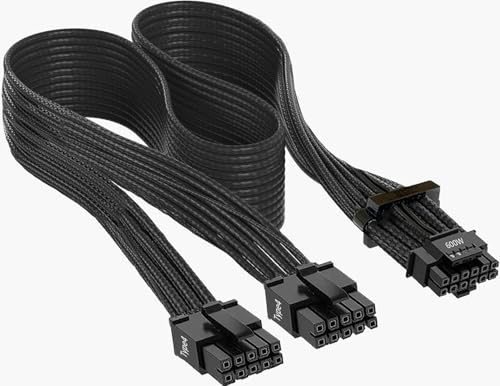
High-power modern GPUs moved to a single small connector that can deliver up to 600W through one cable. This tidies up cable management and supports the huge power draw of flagship cards. The revised 12V-2×6 version improved the pin design for a more secure connection. Functionally, you will see both names used for the same modern standard.
| Feature | 8-pin PCIe | 12VHPWR / 12V-2×6 |
|---|---|---|
| Power per connector | Up to 150W | Up to 600W |
| Cables for a 450W GPU | Three 8-pins | One cable |
| Found on | Budget to mid-range | High-end modern cards |
| Adapter needed? | No, if PSU has them | Only on older PSUs |
Compatibility: What You Need to Check
The key question is whether your power supply provides the connector your GPU wants. Newer ATX 3.0 and ATX 3.1 power supplies include a native 12VHPWR cable. Older PSUs do not, so a high-power modern GPU will ship with an adapter that combines multiple 8-pin plugs into the new connector.
Seating the Connector Fully
Early reports of overheating with the new connector were largely traced to cables that were not pushed in completely. Always insert the plug until it clicks and the latch engages, and avoid sharp bends right at the connector. Leave a little clearance behind the GPU so the cable is not forced into a tight curve against the side panel.
Choosing a PSU for a Modern GPU
If you are buying a high-end card, an ATX 3.0 or 3.1 power supply with a native 12VHPWR cable is the cleanest solution. It avoids adapter clutter and is designed to handle the brief power spikes these cards produce. For mid-range cards that still use 8-pin connectors, a good-quality traditional PSU with enough wattage is perfectly fine.
Cable Routing and Clearance
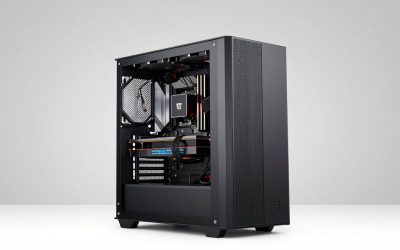
The new connector sits on the top edge of many cards and needs a gentle bend to route toward the PSU. In a compact case, the side panel can force a sharp bend right at the plug, which is exactly what you want to avoid. Check that your case has enough clearance behind the GPU before choosing a small case for a high-power card.
Native Cable vs Adapter
A native cable from an ATX 3.x PSU is a single clean run to the card. An adapter bundles several 8-pin plugs into the connector, creating a bulkier junction that needs room to sit without pressing against the panel. If you use an adapter, plan the cable path so the combined plugs are not crammed into a tight space.
FAQ
Is the 12VHPWR connector safe to use?
Yes, when seated fully and not bent sharply at the plug. The revised 12V-2×6 design further reduced the risk. Most problems came from incomplete connections, so a firm click and gentle cable routing are all it takes to use it reliably.
Do I need a new power supply for a modern GPU?
Not necessarily. If your card includes an 8-pin-to-12VHPWR adapter and your PSU has enough wattage and spare 8-pin cables, you can use your existing unit. A native ATX 3.0/3.1 PSU is cleaner and recommended for the highest-power cards, but it is not mandatory.
Bottom Line
The 8-pin connector still powers most mid-range cards and works with virtually any PSU, while 12VHPWR/12V-2×6 consolidates high wattage into one cable for flagship GPUs. Match your power supply to your card’s connector, use a native ATX 3.x cable when possible, and always seat the plug fully. Do that and the power-connector transition is a non-issue.