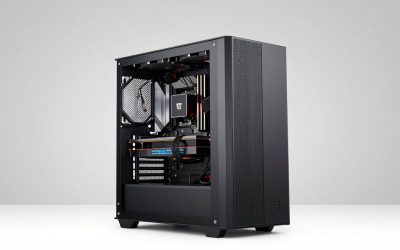
A small form factor build packs full performance into a tiny footprint, and the result feels like magic on a desk. But SFF is the least forgiving kind of build, where every millimeter and every watt is accounted for. Beginners who plan carefully succeed; those who buy parts loosely hit walls. This checklist covers the constraints that make or break a first compact build.
SFF Trades Space for Planning
In a mid tower you can buy roughly compatible parts and sort out the details during assembly. In a small form factor case there is no slack. GPU length, cooler height, power supply type and cable clearance all have hard limits, and a part that is a few millimeters too large simply does not fit. The reward for planning is a striking, portable machine; the penalty for guessing is returns and frustration.
The SFF Constraint Checklist
| Constraint | What to verify |
|---|---|
| GPU length | Card length vs case maximum |
| Cooler height | Air cooler vs case clearance |
| PSU type | SFX / SFX-L, not standard ATX |
| Radiator support | Size and mounting position |
| Cable clearance | Room to route in tight space |
| Thermals | Airflow plan for dense interior |
The Power Supply Is Different
Most small cases do not take a standard ATX power supply. They use the smaller SFX or SFX-L form factor, and buying a normal ATX unit by mistake is a classic beginner error. Confirm the case’s required PSU type first, and pick a quality unit with enough wattage, because there is no room for an oversized supply and the small unit will run harder.
Thermals Need a Plan, Not Luck
A dense interior with little airflow gets hot, so cooling in SFF is a deliberate design rather than an afterthought. Decide how air enters and leaves the case, whether a low-profile air cooler or a compact liquid cooler fits, and accept that the same parts will run warmer and a little louder than they would in a mid tower. Planning airflow up front prevents thermal throttling later.
Measure Twice, Buy Once
The single habit that makes SFF succeed is checking every part against the case’s published maximums before purchase. GPU length, cooler height and radiator support are all listed by case makers precisely because they matter here. Confirming the exact card and cooler fit, rather than assuming, is the difference between a smooth build and a boxed-up return.
Budget Extra Time, Not Just Extra Care
A small form factor build takes longer to assemble than a mid tower, and planning for that time prevents rushed mistakes. Cables must be routed in a precise order because there is no room to fix them later, coolers often go on before the board is in the case, and reaching a screw can mean removing a bracket first. Where a mid tower build might take a couple of hours, a first SFF build can stretch to an afternoon. Treating that as expected, rather than a sign something is wrong, keeps the process calm.
The reward for the extra patience is real: a machine small enough to slip into a backpack or sit unobtrusively on a desk while still packing serious performance. Builders who go in expecting a fiddly, order-sensitive assembly enjoy SFF; those who expect it to be as forgiving as a big case tend to get frustrated. Plan the time, follow a build order, and the compact result is worth it.
FAQ
Is an SFF build too hard for a first build?
It is harder than a mid tower but achievable if you plan meticulously. The assembly is fiddlier because space is tight, so patience matters. If you are comfortable measuring parts against case limits and working carefully in a small area, a first SFF build is very doable.
Do I have to give up performance in SFF?
Not much, if any. Modern compact cases fit strong GPUs and capable CPUs; the tradeoffs are thermals and noise, not raw power. You may run slightly warmer and louder than a big case with the same parts, but the performance ceiling is high.
Bottom Line
SFF rewards planning above all else. Verify GPU length, cooler height, the SFX power supply requirement, radiator support and cable clearance before buying anything, and design airflow deliberately. Do that homework and a small form factor build delivers big performance in a tiny, desk-friendly package; skip it and the same parts become an expensive lesson in tolerances.