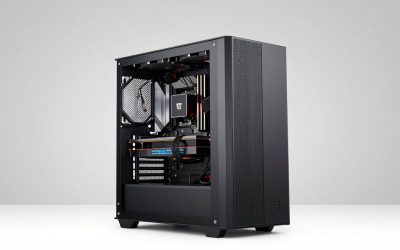
A prebuilt PC can be a great buy, but the industry has a long history of headline parts hiding cut-rate supporting components. The flashy CPU and GPU get top billing while the power supply, motherboard and cooling are chosen to protect margins. Knowing exactly where sellers cut corners lets you read a spec sheet like an insider and avoid a machine that fails or cannot be upgraded.
The Headline Trick
Marketing leads with the two parts buyers recognize: the graphics card and processor. Everything else is where budget prebuilts economize. A listing that names the GPU and CPU in huge type but describes the power supply only as “600W” with no brand or efficiency rating is telling you where it saved money. The absence of detail is itself a red flag.
The Corner-Cutting Checklist
| Component | Red flag | What good looks like |
|---|---|---|
| Power supply | No brand, no 80+ rating | Named unit, 80+ Bronze or better |
| Motherboard | Proprietary or A-series entry | Standard ATX/mATX, decent chipset |
| RAM | Single stick (single channel) | Two sticks, dual channel |
| Cooling | Tiny stock cooler, few fans | Adequate cooler, 2-3 case fans |
| Storage | Small SSD + no room to add | 1TB NVMe, free slots |
The Power Supply Is the Biggest Tell
An unnamed 450-600W unit paired with a power-hungry GPU is the classic corner cut. It may run at launch, but it leaves no headroom, runs hot, and often blocks a future graphics upgrade. A named 650W+ 80+ Gold or at least Bronze unit signals a builder who cared about the whole system, not just the box art.
Single-Channel RAM and Proprietary Boards
Two subtle cuts hurt for years. A single RAM stick runs in single channel and can cost meaningful gaming performance until you add a second, if there is even a free slot. A proprietary motherboard with a non-standard layout or locked BIOS can make future upgrades difficult or impossible, quietly trapping you on the original configuration.
Airflow and the Parts You Cannot See
Cooling is easy to under-provision because buyers cannot feel it in a photo. A case with one exhaust fan and no intake, a tiny CPU cooler, or blocked front airflow will run components hotter, which increases noise and can shorten lifespan. If the listing shows a sealed front panel and mentions only a single fan, assume thermals were a cost-saving casualty.
Ask for the Full Parts List Before You Commit
The most powerful move a prebuilt buyer can make is to request the complete, specific parts list: exact power supply make and wattage, motherboard model, RAM configuration and speed, and cooler type. A seller confident in the build answers plainly. Vague replies, or a refusal to name the power supply and board, tell you the corners were cut where they hoped you would not look. Treat evasiveness as an answer in itself and move on to a listing that discloses everything.
When you do get the list, spend two minutes checking the quiet parts rather than admiring the GPU. Confirm the power supply is a named 80+ Bronze or better unit with headroom, the RAM is two sticks in dual channel, and there is a free M.2 slot and RAM slot for later. A prebuilt that passes those checks is usually honest throughout; one that fails them is warning you about the parts you cannot see in the photos.
FAQ
Does a cut-corner prebuilt still work?
Usually yes, at first. The danger is not day-one failure but long-term cost: a weak PSU that blocks upgrades, poor cooling that shortens life, or a proprietary board that locks you in. The machine runs, but its total cost of ownership climbs and its upgrade path narrows.
What is the single most important spec to check?
The power supply’s brand and efficiency rating. It protects every other part and determines whether you can upgrade the GPU later. If a listing hides the PSU details, treat that as the loudest warning sign on the page.
Bottom Line
Read past the headline GPU and CPU and interrogate the supporting cast: power supply brand and rating, motherboard type, RAM channel count, cooling and storage headroom. The corners get cut where buyers do not look, so looking there is your best protection. A prebuilt with honest, detailed supporting specs is worth more than one with a bigger badge and a mystery power supply.