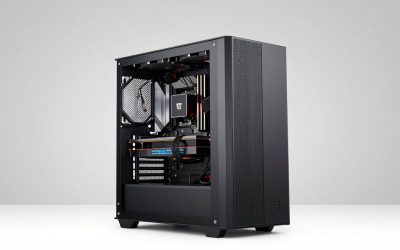
When graphics cards are scarce or overpriced, a curious strategy appears: buy a whole prebuilt gaming PC because the graphics card inside it costs nearly as much as the entire system. You get the GPU you wanted plus a “free” computer around it. Sometimes this is genuinely smart; other times it is a trap. Here is how to tell which situation you are in.
As an Amazon Associate we earn from qualifying purchases at no extra cost to you.


Our Top Picks
 ASUS TUF Gaming GeForce RTX™ 5080 16GB GDDR7RTX5080|OC13.7 x 5.7 x 2.8 inches5 poundsCheck on Amazon
 GIGABYTE Radeon RX 9070 XT Gaming OC 16GRADEON9070XT11.34 x 5.2 x 2.2 inches3.9 poundsCheck on Amazon

Top 3 picks at a glance
Why this strategy exists
System builders buy graphics cards in bulk and bundle them into complete machines, so during periods of high GPU demand a prebuilt can be priced below the cost of buying that same card on its own. If a standalone card is inflated and a prebuilt containing it sells near the card’s price, the rest of the PC — case, CPU, board, RAM, PSU, storage — is effectively thrown in for very little. That is the whole appeal.
When it genuinely makes sense
The strategy pays off when three things are true: the card you want is overpriced or unavailable on its own, a prebuilt containing it is priced close to that card’s standalone cost, and the rest of the prebuilt’s parts are decent enough to use or resell. In that case you either keep the whole machine as a bonus, or harvest the GPU and sell the remaining system to recover much of your outlay.
| Condition | Good sign | Warning sign |
|---|---|---|
| Standalone GPU price | Inflated / out of stock | Available at fair price |
| Prebuilt price vs. card | Near the card’s cost | Big premium over the card |
| Other components | Standard, reusable/resellable | Proprietary, weak PSU |
| Your plan | Keep whole PC or resell rest | Discard unusable parts |
The traps to watch for
Two things sink this plan. The first is proprietary parts: some prebuilts use non-standard motherboards, power supplies, or cases, which makes reusing or reselling the leftover components difficult and lowers their value. The second is a weak supporting build — a marginal power supply or slow single-channel RAM — which drags down the resale value of the rest and can even limit the GPU if you keep the whole machine. Verify standard, quality components before committing.
Do the honest math
Before buying, price three things: the standalone card, the prebuilt, and the realistic resale value of the prebuilt minus its GPU. If the prebuilt costs about the same as the card alone, and the remaining parts are worth a meaningful amount, the strategy wins. If the prebuilt carries a big premium over the card, or its leftover parts are near-worthless, just buy the card — or a different, well-balanced prebuilt — instead. The plan only works when the numbers clearly favor it.
Consider just keeping the whole PC
Often the best outcome is not harvesting at all. If the prebuilt’s other components are solid — a capable CPU, adequate quality PSU, decent RAM and storage — you may be better off simply using the entire machine you effectively got for the price of the GPU. Harvesting and reselling makes sense when the leftover parts are either too weak to want or valuable enough to fetch a good price; otherwise, enjoy the bonus computer.
FAQ
Won’t the leftover parts be junk?
Not necessarily, but it depends entirely on the model. Prebuilts built from standard components with a quality power supply leave you a reusable or resellable system, while those with proprietary boards and marginal PSUs leave little of value. Check the spec sheet for standard form factors and a reputable, adequately sized PSU before assuming the extras are worth anything.
Is this ever better than just building custom?
Only when standalone GPUs are overpriced or unavailable and a prebuilt containing the card you want is priced near that card’s cost. In normal market conditions, building custom or buying the card on its own is simpler and cheaper. Treat the prebuilt-for-the-GPU move as a situational tactic for tight GPU markets, not a default plan.
Bottom line
Buying a prebuilt just for the GPU is worth it only when the card is scarce or inflated, the prebuilt costs close to that card alone, and the remaining parts are standard enough to use or resell. Run the three-way math first — card, prebuilt, and resale of the rest. When the numbers line up it is a genuinely clever move; when they do not, buy the card or a balanced machine directly instead.