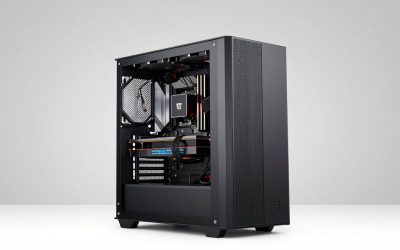
Plenty of people want one machine that games hard in the evening and edits video by day. A hybrid build is entirely achievable, but it is not just a gaming PC with a bigger label. It leans on the parts both jobs share while adding headroom where editing needs it. Done right, you get a single tower that refuses to compromise on either task.
Build on the Overlap
Gaming and editing want the same core parts: a fast multi-core CPU, a capable GPU, quick storage and stable power. A hybrid build starts from that overlap and then pushes cores, memory and storage capacity higher than a pure gaming rig would, because editing scales with those three. The GPU stays strong for both, since games need it and editing uses it to accelerate previews and exports.
Hybrid Build Spec Targets
| Part | Hybrid target | Serves |
|---|---|---|
| CPU | 12-16 cores, high clocks | Exports + high frame rates |
| GPU | High-end current-gen | Gaming FPS + GPU acceleration |
| RAM | 32-64GB | Timelines, layers, background apps |
| Storage | 1TB NVMe + large second drive | Fast working drive + media archive |
| PSU | 750W 80+ Gold | Stable power, headroom |
Choose a CPU That Does Both
The CPU is where hybrid builds differ most from gaming ones. You want a chip that combines high clock speeds for gaming with a generous core count for editing exports. A 12 to 16-core processor with strong single-thread performance hits both targets, finishing renders quickly while still driving high frame rates. This dual demand is the defining choice of a hybrid machine.
Memory and Storage Get Serious
Editing multiplies memory and storage needs. Aim for 32GB at minimum and 64GB if you work with heavy 4K timelines or many layers, comfortably more than a gaming-only build. For storage, run a fast 1TB or larger NVMe drive as the working and game drive, plus a large second drive to archive footage. That two-drive approach keeps active work fast and media organized.
The GPU Serves Both Masters
A strong current-generation GPU is ideal because it does double duty: driving frame rates in games and accelerating effects, previews and certain exports in editing. You do not need a specialized workstation card for mainstream video work; a high-end consumer gaming GPU is the better value and handles both roles well.
Plan Storage as a Two-Tier System
Hybrid users feel storage pressure from both sides: games want fast loading and editors accumulate large media libraries, so a single drive fills up fast. The clean solution is two tiers. A fast 1TB or larger NVMe drive serves as the working drive for the operating system, active games and the project you are currently editing, where speed matters most. A large secondary drive, whether a big NVMe or a high-capacity hard drive, archives finished projects, raw footage and the games you are not actively playing.
This split keeps the fast drive from clogging with cold data while giving you room to keep years of footage without constantly deleting things. It also makes backups saner, since the archive tier is where your irreplaceable project files live and can be duplicated. For a machine that both games and creates, thinking about storage as active versus archive from the start prevents the mid-project scramble for space that catches single-drive builders off guard.
FAQ
Is a hybrid build more expensive than a gaming PC?
Somewhat, because you add cores, memory and storage capacity beyond what pure gaming requires. The GPU cost is similar, but the higher core-count CPU, 32-64GB of RAM and extra storage raise the total. In exchange you get one machine that fully handles two demanding jobs, which is cheaper than two specialized PCs.
Should I prioritize the CPU or GPU if my budget is tight?
Balance both, but do not starve the CPU as a gaming build might. If forced to choose, keep enough cores for your editing exports, since a weak CPU lengthens renders in a way you feel daily, then buy the strongest GPU the remaining budget allows for gaming performance.
Bottom Line
A hybrid gaming and editing PC is a gaming build with editing headroom deliberately added: a 12-16 core CPU with high clocks, a high-end GPU, 32-64GB of RAM, and a fast working drive plus a large archive drive. Build on the parts both jobs share, add capacity where editing demands it, and one tower will handle your games and your timelines without compromise.