A home theater PC turns any TV into a do-everything media hub: 4K movie playback, streaming apps, a personal media server front-end, light gaming, and web browsing from the couch. The art of a good HTPC build is doing all that silently, coolly, and in a box small enough to sit in a living room without looking out of place. That means picking parts for efficiency and quiet, not maximum power.
Start with the form factor
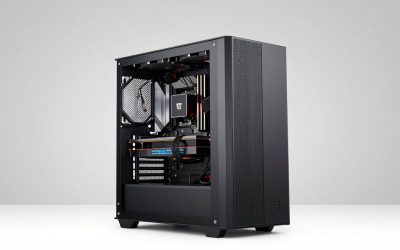
An HTPC lives near a TV, so a compact mini-ITX or slim micro-ATX case is the natural choice. These enclosures fit on a media shelf and, paired with low-power parts, run whisper-quiet. Measure your shelf space before buying so the case, cooler and any graphics card physically fit.
Choosing the core components
CPU with capable integrated graphics
For pure media playback you often don’t need a discrete GPU at all. A modern processor with integrated graphics can decode 4K video with hardware acceleration, drive an HDR display, and handle streaming apps while sipping power. That keeps heat and noise down and shrinks the whole build.
When to add a graphics card
If you want to play games from the couch or run a demanding home-server transcoding load, add a compact, efficient dedicated card. For a media-only box, skip it and enjoy the lower power draw and quieter operation.
| HTPC type | Budget | CPU/GPU | RAM | Storage |
|---|---|---|---|---|
| Media only | $400–550 | APU, integrated graphics | 16GB | 500GB–1TB NVMe |
| Media + light gaming | $700–900 | CPU + compact 8GB card | 16GB | 1TB NVMe |
| Media server front-end | $600–800 | APU or CPU + card | 16–32GB | 1TB NVMe + large HDD |
Storage and connectivity
A 500GB–1TB NVMe drive holds the OS and apps and loads instantly. If the HTPC also stores your media library, add a large hard drive or connect to a network server. On the back panel, make sure you have an HDMI output that matches your TV’s resolution and HDR capability so you get full 4K playback.
Silence is the whole point
Nobody wants fan whine competing with a movie. Choose a low-power CPU that a quiet cooler can tame, set case fans to a gentle curve, and a 400–500W efficient power supply will run cool and near-silent at the modest loads an HTPC produces. Low power draw is the secret to quiet operation in a small case.
Prebuilt vs custom
Small prebuilt mini PCs are convenient but often can’t be upgraded and may lack the ports or storage for a full media hub. A custom HTPC lets you match the case to your shelf, choose the exact video output your TV needs, and add storage for a media library, all while keeping it quiet.
Remote control and software
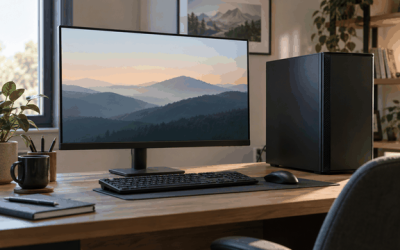
An HTPC is only as pleasant as its couch experience. Plan for a wireless keyboard-and-touchpad combo or a remote so you can control it from the sofa, and choose media software with a big, readable interface designed for a television rather than a desk. These finishing touches turn a small computer into a genuine living-room appliance.
Think about how the box wakes and sleeps too. Fast resume from sleep on an NVMe drive means the HTPC is ready almost instantly when you sit down, and low idle power keeps it inexpensive to leave in standby. Little conveniences like these determine whether the whole household actually uses it.
FAQ
Do I need a dedicated graphics card in an HTPC?
Not for media playback. A modern CPU with integrated graphics decodes 4K HDR video in hardware and runs streaming apps easily. Add a compact dedicated card only if you also plan to game from the couch or handle heavy server transcoding.
How quiet can a home theater PC really be?
Nearly silent, if you build it right. Low-power parts, a quiet cooler, gentle fan curves, and an efficient power supply keep noise below what you’d notice during a film. The key is choosing efficient components so there’s little heat to move.
Bottom line
A great HTPC is small, silent, and efficient: a CPU with capable integrated graphics, 16GB of RAM, a fast NVMe boot drive, and storage sized to your library, all in a compact case that fits your shelf. Skip the discrete GPU unless you’ll game or transcode, aim for a $400–800 build depending on ambitions, and you’ll have a living-room hub that does everything without making a sound.