Liquid cooling comes in two very different forms, and confusing them leads to overspending or underbuilding. An all-in-one, or AIO, is a sealed, ready-to-install cooler. A custom loop is a hand-built system of parts you assemble and maintain. For most builders the AIO is the right call; the custom loop is a hobby as much as a cooler.
As an Amazon Associate we earn from qualifying purchases at no extra cost to you.


Our Top Picks


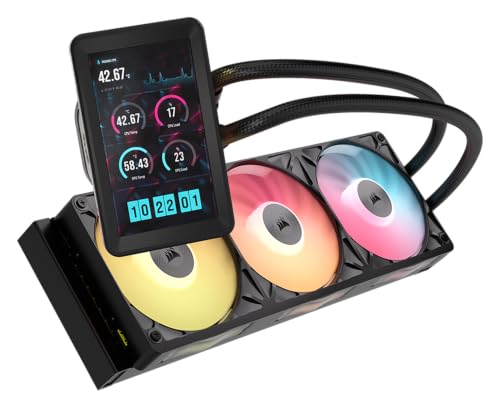

Top 3 picks at a glance
The core difference
An AIO ships pre-filled and sealed: pump, radiator, and block in one unit that mounts in 20-30 minutes and needs no maintenance for years. A custom loop uses separate pump, reservoir, blocks, radiators, fittings, and tubing that you plan, assemble, fill, bleed, and periodically service. One is an appliance; the other is a project.
What each is really for
AIOs deliver excellent CPU cooling with zero fuss. Custom loops exist for maximum thermal performance across CPU and GPU together, near-silent operation, and the visual wow of hard-tube builds. You pay heavily for that last 5-10 percent and the looks.
| Factor | AIO | Custom loop |
|---|---|---|
| Price | $80-200 | $400-1000+ |
| Install time | 20-30 min | Several hours |
| Maintenance | None for years | Refill/clean every 1-2 years |
| Cooling ceiling | Excellent for CPU | Best, cools CPU+GPU |
| Leak risk | Very low (sealed) | Higher if assembled poorly |
| Aesthetics | Clean | Showpiece |
Which should you choose?
Pick an AIO if
You want strong cooling with no hassle, a first or second build, or a machine that just needs to work. A quality 240-360 mm AIO tames even high-end CPUs and installs in half an hour. This covers the vast majority of gaming and workstation builds.
Consider a custom loop if
You want the absolute quietest, coolest system, plan to cool the GPU on the loop too, enjoy the building process, and accept the cost and upkeep. It is an enthusiast choice driven by passion and aesthetics, not value. Budget $400-1000 or more and several build hours.
Matching the cooler to real goals
Choosing between an AIO and a custom loop comes down to being honest about what you actually want from the build, because the two serve very different priorities at very different price points.
Radiator size drives AIO performance
Within AIOs, the radiator area matters most. A 240 mm unit handles mainstream CPUs comfortably, while a 360 mm unit tames high-end chips and stays quieter under load by spreading heat across more surface. Choosing the right radiator size is a bigger performance lever than jumping to a custom loop for CPU-only cooling.
The custom loop is a commitment
A custom loop rewards you with the lowest temperatures when cooling CPU and GPU together, near-silent operation, and a genuine showpiece, but it asks for hours of assembly, careful leak testing, and refills every year or two. Budget several hundred dollars minimum and treat it as an ongoing hobby, not a set-and-forget appliance.
Leak testing is non-negotiable for loops
Because you assemble every fitting, a custom loop must be leak tested with the system powered off before you ever apply power to the components. Run the pump alone, using a jumper or dedicated header, and watch for drips for several hours. Skipping this step is how expensive parts get ruined; a sealed AIO removes this risk entirely.
FAQ
Do custom loops really cool that much better?
They lead, especially when cooling CPU and GPU together with large radiator area, but the gap over a good 360 mm AIO on the CPU alone is often only a handful of degrees. The bigger practical wins are lower noise and the visual result, not a dramatic temperature drop.
Are AIOs risky because they can leak?
Modern sealed AIOs rarely leak and require no top-ups; the coolant is enclosed for the unit lifespan of roughly 5-7 years. Custom loops carry more leak risk because you assemble every fitting, which is why careful leak testing before powering on is essential.
Bottom line
For nearly everyone, a 240-360 mm AIO is the smart liquid choice: excellent cooling, easy install, no maintenance, at $80-200. Reserve the custom loop for enthusiasts who want to cool CPU and GPU together, chase silence and looks, and enjoy the build itself.