The best outdoor rugs for patio comfort and durability are polypropylene rugs with a tight, low-pile weave, UV-resistant fibers, and a breathable construction that lets rain drain instead of trapping moisture beneath the rug.
Polypropylene is the strongest all-around choice for most patios because it resists fading, absorbs very little water, dries relatively quickly, and can usually be cleaned with a hose. However, the right rug also depends on your patio’s layout, the amount of direct sunlight it receives, whether it sits under furniture, and how often you are willing to clean it.
As an Amazon Associate we earn from qualifying purchases at no extra cost to you.


Our Top Picks
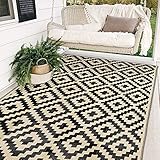
 MontVoo Outdoor Rug Carpet Waterproof 5x8 Outdoor Patio5' X 8' (Rectangular)2.7 poundsCheck on Amazon
 JONATHAN Y Moroccan Geometric Indoor Outdoor Area Rug7'9" x 10' (Rectangular)120 x 96 x 0.19 Inches6.6 PoundsCheck on Amazon
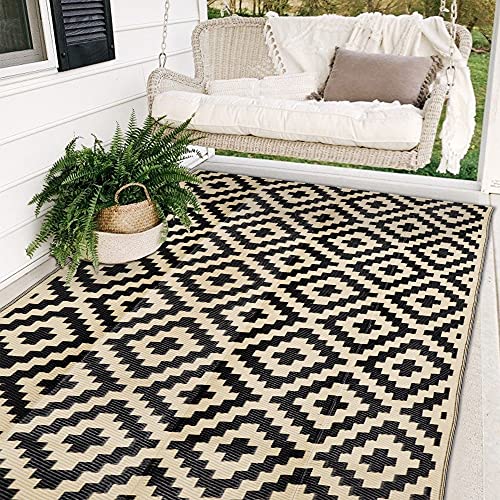
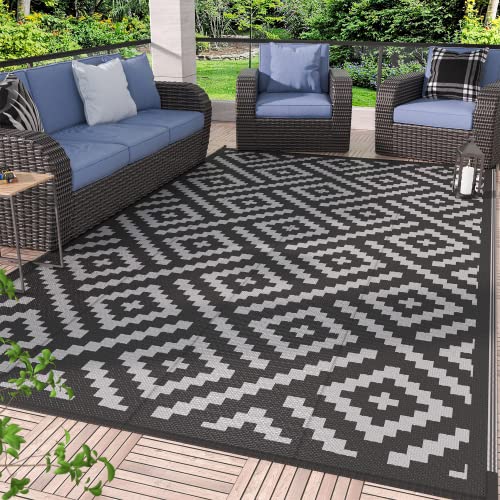
Top 3 picks at a glance
What to Compare Before Buying an Outdoor Patio Rug
1. Weather-resistant material
Outdoor rugs are commonly made from polypropylene, polyester, recycled plastic fibers, nylon, or natural fibers such as jute and sisal. These materials behave differently when exposed to rain, humidity, sunlight, food spills, and foot traffic.
| Material | Water resistance | UV resistance | Best use | Main drawback |
|---|---|---|---|---|
| Polypropylene | Excellent | Very good, especially when UV-treated | General patios, dining areas, pool-adjacent spaces | Can feel less plush than indoor fibers |
| Polyester | Good | Good | Covered patios and decorative seating areas | May flatten or show wear sooner in busy zones |
| Recycled plastic | Excellent | Good to very good | Wet climates, easy-clean spaces, sustainability-focused buyers | Can feel coarse and may retain heat in strong sun |
| Nylon | Good | Moderate to good | High-traffic covered patios | Check the specific UV treatment; some nylon fades faster |
| Jute or sisal | Poor to moderate | Moderate | Dry, fully covered porches | Absorbs moisture and is harder to dry and clean |
For an uncovered patio, choose solution-dyed polypropylene or another fiber specifically labeled UV-resistant. “Outdoor” alone does not guarantee equal performance: look for construction designed for continuous sunlight and moisture exposure.
2. Weave density and pile height
Weave density affects both comfort and longevity. A dense, flat weave generally handles chair legs, dragging feet, and frequent cleaning better than a loose, shaggy weave. It is also less likely to hold leaves, sand, and crumbs.
- Low pile or flat weave: Best for dining sets, sliding doors, and areas where chairs must move easily.
- Medium pile: A useful compromise for lounge seating and bare feet.
- High pile or shag: More cushioned, but slower to dry and more difficult to clean outdoors.
- Open weave: Drains quickly but may feel less stable and can allow small debris through.
- Tight weave: More comfortable and resistant to snagging, but needs a washable or hose-cleanable surface.
For most patios, a low-profile weave around 0.2 to 0.4 inches thick is practical. Avoid very thick rugs directly against exterior doors unless you have measured the door clearance.
Drainage Matters More Than Cushioning
A rug can be water-resistant and still cause problems if water remains trapped underneath it. Persistent dampness can encourage mildew, stain concrete or wood decking, and damage the rug backing.
Look for a rug with no absorbent foam pad permanently attached, a breathable underside, and edges that can be lifted easily. On wood or composite decking, avoid placing a completely sealed rubber-backed rug in a location that stays wet. A breathable rug pad or a rug designed for deck drainage is safer.
For patios that receive heavy rain, lift and dry the rug periodically even if the material itself does not absorb much water. Drainage is a system issue: the rug, pad, patio slope, and surface beneath all matter.
UV Resistance and Color Selection
Direct ultraviolet exposure gradually weakens fibers and fades dyes. A UV-resistant rug will last longer, but no textile remains unchanged after years of intense sunlight.
- Choose solution-dyed fibers when available; the color is integrated into the fiber rather than applied only to the surface.
- For full-day sun, favor medium tones and patterned designs that disguise gradual fading.
- Dark rugs absorb more heat and may become uncomfortable under bare feet.
- Red, orange, and some bright blue dyes can show fading sooner than neutral or earth-tone patterns, depending on the dye system.
- Rotate the rug several times each season if the furniture layout allows it.
If the patio is covered but open on the sides, a polyester rug may be adequate. For a south-facing or west-facing uncovered patio, polypropylene with explicit UV treatment is the safer specification.
Choose the Rug Size for the Patio Layout
The correct size should support the furniture, not merely fill an empty rectangle. Measure the usable patio area first, then account for door swings, stairs, grills, planters, and drainage channels.
| Patio layout | Useful rug size | Placement rule |
|---|---|---|
| Small bistro set | 5 × 7 feet or 6 × 9 feet | Allow all chair legs to remain on the rug when pulled out |
| Two lounge chairs and a small table | 5 × 7 feet or 6 × 9 feet | Place the front legs of each chair on the rug |
| Three-seat sofa with coffee table | 6 × 9 feet or 8 × 10 feet | Keep the sofa’s front legs and the table fully on the rug |
| Dining table for four to six | 8 × 10 feet or 9 × 12 feet | Extend beyond the table by about 24 inches on every side |
| Large sectional | 8 × 10 feet, 9 × 12 feet, or larger | Place the entire seating footprint on the rug when possible |
A worked sizing calculation
Suppose a rectangular dining table is 72 inches long and 36 inches wide. If you want about 24 inches of rug beyond each side for chairs, calculate:
- Length: 72 + 24 + 24 = 120 inches, or 10 feet
- Width: 36 + 24 + 24 = 84 inches, or 7 feet
An 8 × 10-foot rug is therefore the practical choice because it exceeds the minimum width and gives chairs room to move. If diners frequently push chairs back farther, choose a 9 × 12-foot rug instead.
Maintenance: Match the Rug to Your Cleaning Routine
For low-maintenance ownership, choose a rug that can be shaken, swept, spot-cleaned, and rinsed with a garden hose. Check the care label before using detergent or a pressure washer; high pressure can damage fibers, loosen edges, or force dirt deeper into the weave.
- Shake or sweep the rug weekly during high-use periods.
- Blot food and drink spills instead of rubbing them outward.
- Rinse with clean water when dirt accumulates.
- Use mild soap and a soft brush for stubborn marks.
- Hang or lay the rug over a clean surface until both sides are completely dry.
- Store it rolled, not sharply folded, during extended winter or rainy periods.
Never store a damp rug. Even synthetic fibers can develop mildew odors when moisture is sealed inside a roll.
Best Choice by Patio Situation
| Your situation | Recommended specification | Why |
|---|---|---|
| Uncovered patio with intense sun | UV-treated polypropylene, low pile, medium-color pattern | Balances fade resistance, drying speed, and heat comfort |
| Frequent rain or humid climate | Breathable flat weave, no sealed foam backing | Reduces trapped moisture beneath the rug |
| Dining area with frequent spills | Dense, low-pile polypropylene, hose-cleanable | Chairs move easily and food debris does not lodge deeply |
| Covered porch used barefoot | Medium-pile polyester or soft polypropylene | Provides more comfort while receiving less weather exposure |
| High-traffic family patio | Dense synthetic weave with reinforced edges | Better resistance to abrasion and repeated cleaning |
| Dry climate with a fully protected porch | Natural-fiber look or synthetic imitation | Natural fibers are more reasonable when rain exposure is minimal |
What to Avoid
Avoid indoor rugs made from cotton, viscose, or ordinary wool unless they remain completely protected from weather. Avoid plush pile on uncovered patios if the rug cannot be lifted easily. Also be cautious with cheap, brittle backing that flakes after sun exposure, and with rugs whose edges curl because they create trip hazards near steps and doors.
Frequently asked questions
Can I use an outdoor rug on wood or composite decking?
Yes, but choose a breathable rug or one designed for deck drainage rather than a completely sealed rubber-backed rug. A rug that stays wet can trap moisture against the surface, encourage mildew, or damage decking. Lift and dry the rug periodically after heavy rain, even when the rug itself is made from a water-resistant synthetic fiber.
Should I use a rug pad under an outdoor patio rug?
Use a breathable rug pad when additional separation or drainage is needed, but avoid an absorbent foam pad permanently attached to the rug. The pad, rug, patio slope, and surface beneath all affect drainage. On a wet location, a breathable construction is safer than a sealed backing that holds moisture underneath.
What outdoor rug color is most practical for a sunny patio?
Medium tones and patterned designs are practical for a full-day-sun patio because they can disguise gradual fading. Dark rugs absorb more heat and may become uncomfortable under bare feet. Solution-dyed fibers are preferable when available, and rotating the rug several times each season can help distribute sun exposure when the furniture layout allows it.
How much clearance should I leave at an exterior door?
Leave enough clearance for the door to open freely, and measure before choosing a thick rug. Low-profile rugs are generally more practical near sliding doors and exterior doors, while very thick rugs can interfere with door clearance. Also account for door swings, stairs, grills, planters, and drainage channels when measuring the usable patio area.
How should I store an outdoor rug during winter or extended rain?
Store the rug rolled rather than sharply folded, and never put it away while damp. Before storage, hang it or lay it over a clean surface until both sides are completely dry. Sealing moisture inside a roll can cause mildew odors, even with synthetic fibers. Shake or sweep away loose debris before preparing it for storage.
Final Buying Recommendation
For the broadest range of patios in 2026, choose a UV-treated polypropylene rug with a dense low-profile weave, breathable underside, reinforced edges, and a size that extends roughly 24 inches beyond dining chairs or the front legs of lounge furniture. Move toward a more open, quick-draining construction for wet climates, or a softer medium-pile design for a covered porch. The best outdoor rugs for patio use are not necessarily the thickest; they are the ones whose material, weave, drainage, and dimensions match the conditions where they will remain.