Five thousand dollars buys a build with essentially no weak links, but spending it well still takes discipline. The trap at this level is throwing money at prestige parts that add little real-world benefit while ignoring the details that actually make a high-end machine feel premium: cooling, acoustics, storage, and a display that can show off all that power. Here is how to allocate a $5,000 budget so every dollar earns its place.
As an Amazon Associate we earn from qualifying purchases at no extra cost to you.


Our Top Picks
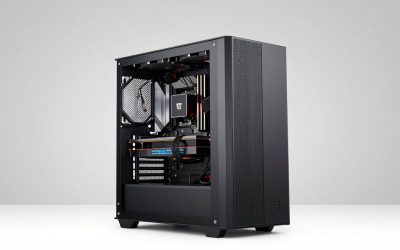
 CORSAIR 7000D Airflow Full-Tower ATX PC Case7000 Series21.65 x 9.76 x 23.62 inches41.23 poundsCheck on Amazon


Top 3 picks at a glance
Spend where it counts
The flagship graphics card is the heart of a 4K build and deserves the largest share. Pair it with a high-end CPU, but resist buying the absolute top-tier workstation chip unless you have a productivity reason; a strong 8-16 core gaming CPU wins in games. Then invest generously in cooling, a large fast SSD, and a quality 4K high-refresh monitor, because those are what you actually experience day to day.
Where a 5000 dollar budget goes
| Component | Tier | Approx. spend |
|---|---|---|
| Graphics card | Flagship, 16-24GB | $1,500-2,000 |
| CPU | High-end 8-16 core | $450-600 |
| Motherboard | Premium X-series | $300-450 |
| RAM | 64GB DDR5-6000 | $180-260 |
| Storage | 4TB Gen4/Gen5 NVMe | $300-450 |
| Cooling | 360mm AIO or custom loop | $180-500 |
| PSU | 1000W+ 80+ Platinum | $180-260 |
| Case + monitor | Premium + 4K 144Hz | $900-1,300 |
Cooling and acoustics make it feel premium
A flagship GPU and high-end CPU generate serious heat, so a 360mm all-in-one cooler or a custom loop is justified here, both for temperatures and for keeping the machine whisper-quiet under load. Choose a case with excellent airflow and sound-dampening, plan cable routing carefully, and set conservative fan curves. A $5,000 PC that howls under load feels cheaper than a well-tuned $2,000 one.
Do not forget the display
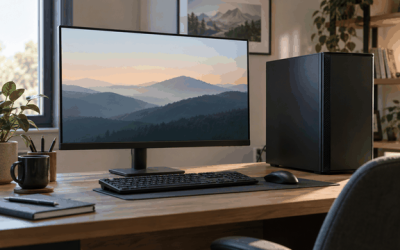
All this hardware is wasted on a mediocre monitor. Budget for a 4K 144Hz panel with good HDR, or a high-refresh ultrawide if you prefer immersion. The GPU has the horsepower to drive them, and the visual payoff is where you will actually feel the money you spent.
Build quality and the details that last
At this budget the difference between a good build and a great one lives in the details that cheaper machines skip. Quality case fans, a well-planned airflow path, and clean cable management do not just look good; they keep temperatures and noise low for the life of the machine. Spending a little on premium fans and a high-airflow case pays back every day you use the PC, whereas a flashy part that runs hot and loud becomes a daily annoyance no matter how fast it benchmarks.
It is also worth thinking about longevity and resale. Generous power supply headroom, a high-quality motherboard with strong power delivery, and ample cooling mean the platform can accept a future GPU or CPU upgrade without becoming the bottleneck, stretching the value of your investment. A tidy, well-cooled, standard-parts build also holds its resale value far better than an exotic one-off. The goal at $5,000 is not to buy the most expensive sticker on every box, but to assemble a machine that is fast, quiet, cool, and still desirable years from now.
Frequently asked questions
Should I do a custom water loop at this budget?
A custom loop looks stunning and cools superbly, but it adds cost, complexity, and maintenance. A quality 360mm AIO delivers the vast majority of the thermal benefit with none of the upkeep. Choose a custom loop only if the aesthetic and the hobby appeal to you, not because you think you need it for performance.
Is the most expensive CPU worth it for gaming?
Usually not. The highest-core-count chips are built for heavy productivity, and in games a strong high-end gaming CPU often matches or beats them while costing less. Put those savings toward the GPU, cooling, or your monitor, all of which affect your experience more than extra cores you will not use.
Bottom line: A $5,000 build should have a flagship GPU, a strong but sensible CPU, generous cooling, fast high-capacity storage, and a display worthy of it all. Spend on what you experience daily, and skip prestige parts that add cost without adding enjoyment.