Our Top Picks
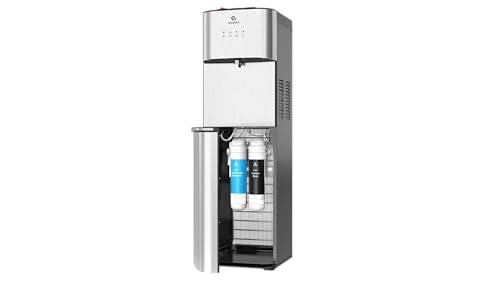 Avalon Self Cleaning Bottleless Water Cooler Water Dispenserfull size14 x 12 x 41 inches44 PoundsCheck on Amazon
 Brio Self Cleaning Bottleless Water Cooler Dispenser17 x 13.5 x 40.5 inches46.09 PoundsCheck on Amazon
 Brio Commercial Grade Bottleless Ultra Safe Reverse Osmosis14.3 x 12.2 x 41.4 Inches51.1 PoundsCheck on Amazon

Top 3 picks at a glance
Best Bottleless Water Coolers for Home & Office
The best bottleless water coolers for most homes are compact point-of-use dispensers with a sediment filter, carbon filter, and optional reverse-osmosis stage; offices should usually choose a plumbed-in floor-standing unit with faster recovery, larger internal tanks, and a serviceable filtration system.
Unlike bottled coolers, these systems connect directly to a cold-water line, filter the incoming water, and dispense chilled, room-temperature, or hot water on demand. The right choice depends less on the number of temperature buttons than on filtration quality, recovery speed, installation access, and how much maintenance your household or office can manage.
As an Amazon Associate we earn from qualifying purchases at no extra cost to you.


Quick comparison: which type fits your space?
| Use case | Best specification class | Typical filtration | Typical dimensions | Plumbing requirement | Typical market range |
|---|---|---|---|---|---|
| Apartment or small kitchen | Countertop direct-connect dispenser | 2-stage carbon and sediment; optional RO | 12–16 in W × 12–16 in D × 15–20 in H | Cold-water branch, shutoff valve, drain only if required | $300–$700 |
| Family kitchen | Under-sink filtration with countertop faucet or compact dispenser | 3–5 stages, often including RO | Dispenser: 5–10 in W; filter assembly under sink | Cold-water line, drain saddle, and sometimes a storage tank | $400–$1,000 |
| Small office, up to about 15 users | Floor-standing bottleless cooler | 2–3 stages, commonly sediment plus carbon | 10–13 in W × 11–14 in D × 38–45 in H | Nearby cold-water supply and standard electrical outlet | $500–$1,200 |
| Busy office or shared workspace | Commercial direct-chill or high-capacity unit | Carbon, sediment, and optional scale or UV treatment | 12–18 in W × 16–24 in D × 40–50 in H | Dedicated cold-water connection; drain may be required | $1,000–$3,000 or more |
Best bottleless water cooler choices by situation
Best for a typical home: compact three-temperature dispenser
A compact floor-standing or countertop dispenser is the easiest choice when your incoming water already meets local drinking-water standards and you mainly want better taste, cold water, and instant hot water. Look for separate sediment and activated-carbon cartridges, a child safety lock on the hot tap, and a stainless-steel cold-water reservoir.
Brio bottleless dispensers, including the Brio Moderna line, are examples of the consumer-focused format. Avalon’s bottleless A-series units are another familiar option in this category. Exact filter configuration and dimensions vary by model, so confirm whether replacement cartridges are proprietary and whether the quoted height includes the drip tray.
Best for maximum contaminant reduction: reverse-osmosis dispenser
Choose reverse osmosis (RO) when your water has high dissolved-solids readings, persistent mineral taste, or a known contaminant concern that carbon filtration alone may not address. A typical RO system uses a sediment prefilter, one or two carbon filters, an RO membrane, and a final polishing filter.
The trade-off is slower production and more installation work. RO systems normally need a drain connection for reject water and may use a small pressurized storage tank. They also remove minerals that some people prefer in drinking water, so a remineralization cartridge can improve taste.
Best for a small office: serviceable floor-standing cooler
For an office, prioritize recovery rate and service access over the smallest footprint. A floor-standing cooler with a 1–2 gallon cold tank and a separate hot tank is more practical than a countertop model when several people fill bottles throughout the day. Elkay EZH2O bottleless systems are established examples of plumbed-in workplace hydration equipment, particularly where touchless operation, bottle filling, and usage monitoring matter.
For a larger office, specify a unit designed for continuous commercial use rather than adapting a residential cooler. Commercial models may offer stronger chilling systems, higher flow rates, leak detection, UV treatment, and a drain connection for the drip tray.
Filtration stages: what each one actually contributes
- Sediment filter: Captures sand, rust, and suspended particles. A 5-micron cartridge is a common starting point; finer cartridges may clog sooner.
- Activated carbon: Reduces chlorine taste and odor and can reduce some organic compounds. Carbon capacity depends on cartridge size and contact time, not just the word “carbon” on the label.
- Second carbon stage: Adds contact time and protects the RO membrane when an RO system is installed.
- Reverse-osmosis membrane: Reduces many dissolved salts and other contaminants, but produces wastewater and needs adequate inlet pressure.
- Remineralization: Adds a small amount of calcium or magnesium after RO to improve flavor; it is a taste feature, not a substitute for certification.
- UV treatment: Helps control microorganisms inside the treatment path, but does not remove sediment, chemicals, or dissolved minerals.
Do not choose by stage count alone. A well-sized two-stage carbon system can be a better fit than an undersized six-stage system with expensive cartridges and a very slow flow rate. Check certifications for the specific contaminant reduction you need, such as NSF/ANSI 42 for aesthetic chlorine reduction or NSF/ANSI 58 for RO systems.
Cooling and heating speed: the numbers that matter
Manufacturers may advertise a cold-water temperature without explaining recovery. A cooler that reaches 40–50°F can still disappoint if its tank is small or its compressor cannot recover between users. For an office, compare cold-water tank capacity, gallons per hour, and whether the unit uses compressor cooling rather than thermoelectric cooling.
Hot-water performance also has two separate ratings: heating temperature and recovery. A hot tank that reaches roughly 185–203°F is useful for tea and instant meals, but a small tank can run cold after several large mugs. A child lock and an insulated hot tank are more important in a family home than a marginally higher maximum temperature.
A practical office capacity calculation
Assume 12 employees each drink three 16-ounce bottles during an eight-hour workday. That is 576 ounces, or 4.5 gallons, of water per day. If 25% of that demand occurs during a busy 30-minute period, the cooler must supply about 1.1 gallons in that half-hour, equivalent to 2.25 gallons per hour during the peak. A unit rated around 2–3 gallons per hour with at least a 1-gallon cold reservoir is a safer choice than a small countertop unit rated only for occasional household use.
This calculation does not mean every office needs a commercial machine: bottle filling is spread across the day in many workplaces. It shows why user count and peak demand are more useful than the cooler’s maximum advertised temperature.
Dimensions and installation details people often miss
- Door clearance: Leave enough space to remove filters and open the service panel, not just enough space to fit the cabinet.
- Ventilation: Compressor-based units need airflow around their sides and rear. Do not wedge one tightly between cabinets.
- Counter depth: A countertop dispenser may occupy 14–16 inches of depth, leaving little room behind it for tubing and a power cord.
- Height: Check the height with the bottle-filling area and drip tray installed. A tall unit under an upper cabinet can be awkward to use.
- Electrical supply: Most residential units use a standard grounded outlet. Avoid extension cords and do not share an overloaded power strip with heaters or microwaves.
Plumbing requirements before you buy
A basic direct-connect cooler usually needs a nearby cold-water pipe, an accessible shutoff valve, and a small food-grade supply tube. Installation commonly uses a tee fitting with a dedicated shutoff rather than piercing an existing flexible hose. The tubing should be secured so it cannot kink when the cooler is moved.
An RO cooler additionally needs a drain connection and may need a pressure regulator or booster pump. Verify the minimum inlet pressure in the installation manual; poor pressure can cause slow production, noisy cycling, and frequent low-flow warnings. Units with a drainable drip tray or automatic drain also need a suitable waste connection, which may make professional installation worthwhile.
Do not connect a dispenser to a hot-water line. If the home has an older, corroded, or nonstandard plumbing system, install a shutoff that can be reached without removing cabinets. A leak detector or automatic water shutoff is particularly sensible for an unattended office kitchenette.
Maintenance cost and workload
Most bottleless coolers need filter replacement every six to twelve months, but the correct interval depends on incoming water quality and gallons used. Heavy office usage can shorten cartridge life substantially. Budget roughly $50–$200 per year for consumer replacement filters and more for multi-stage commercial systems; RO membranes and specialty cartridges add to that cost.
- Replace filters when the rated capacity is reached, flow drops, or taste changes.
- Sanitize the reservoirs and dispensing lines according to the manual, commonly every three to six months in a busy workplace.
- Clean the drip tray weekly in a shared office.
- Vacuum dust from compressor vents periodically to protect cooling performance.
- Flush new cartridges fully before drinking the water, especially carbon and RO filters.
If maintenance will be inconsistent, choose a simpler two-stage system with readily available cartridges rather than a complex setup that depends on several proprietary replacements. For offices, a service contract can cost more than DIY maintenance but may prevent downtime and missed filter changes.
Final buying decision
Choose a compact carbon-filtered dispenser for ordinary municipal water and limited household demand. Choose RO when dissolved minerals or a specific certified contaminant reduction is the priority. Choose a commercial floor-standing unit when more than roughly 10 people share the cooler, peak demand is concentrated, or the machine must survive continuous daily use.
Before ordering, confirm five things: the complete installed dimensions, filter price and availability, cold and hot recovery ratings, whether a drain is required, and the exact plumbing connection included. Those details predict long-term convenience far better than the number of temperature settings or filtration stages printed on the front panel.
Frequently asked questions
Do bottleless water coolers need a drain connection?
Not always. A basic direct-connect cooler usually needs a nearby cold-water pipe, accessible shutoff valve, and food-grade supply tube, but no drain unless the design requires one. An RO cooler additionally needs a drain connection for reject water and may need a pressure regulator or booster pump. Check the installation manual for the model’s specific requirements.
What should I check before installing a bottleless water cooler under a cabinet?
Check the unit’s height with the bottle-filling area and drip tray installed, and make sure it will remain comfortable to use under the cabinet. Also allow room behind a countertop dispenser for tubing and the power cord. Compressor-based units need airflow around their sides and rear, so avoid wedging one tightly between cabinets.
How often do bottleless water cooler filters need to be replaced?
The article does not give a replacement interval because filter life depends on the cartridge, water conditions, and usage. It recommends confirming whether replacement cartridges are proprietary and considering that finer sediment cartridges may clog sooner. Carbon performance also depends on cartridge size and contact time, not simply on the word “carbon” on the label.
Is reverse osmosis necessary if my water already meets drinking-water standards?
Not necessarily. If incoming water meets local drinking-water standards and your main goals are better taste, cold water, and instant hot water, a compact dispenser with sediment and activated-carbon filtration may be sufficient. Choose RO when water has high dissolved-solids readings, persistent mineral taste, or a known contaminant concern that carbon filtration alone may not address.
What certifications should I look for when choosing a bottleless water cooler?
Check certifications for the specific contaminant reduction you need rather than choosing by stage count alone. NSF/ANSI 42 applies to aesthetic chlorine reduction, while NSF/ANSI 58 applies to RO systems. A well-sized two-stage carbon system can be a better fit than an undersized six-stage system with expensive cartridges and very slow flow.