The best torque wrenches for accurate fastener work are a calibrated click wrench matched to the fastener’s torque range: use a 1/4-inch model for small electronics and bikes, a 3/8-inch wrench for most automotive and household jobs, and a 1/2-inch wrench for wheel lugs and high-torque suspension hardware.
As an Amazon Associate we earn from qualifying purchases at no extra cost to you.


Our Top Picks
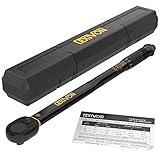
 LEXIVON Torque Wrench 1/2-Inch Drive Click 10~150 Ft-Lb/13.6~203.51/2"DR. 10-150 FT-LB2.5 x 3 x 18 inches3 poundsCheck on Amazon
 LEXIVON 3/8-Inch Drive Click Torque Wrench 10~80 Ft-Lb/13.6~108.53/8"DR. 10-80 FT-LB2.5 x 3 x 14 Inches2.3 poundsCheck on Amazon
 EPAuto 1/2-inch Drive Click Torque Wrench1/2 Inch Drive (10-150 ft.-lb.)17.4 x 3.3 x 2.6 inches3.5 PoundsCheck on Amazon
 LEXIVON Bike Torque Wrench 1/4-Inch Dr. 15-Piece Kit1/4"DR. 1.48-19.18 FT-LB Kit4.69 x 10.35 x 2.28 Inches1.3 poundsCheck on Amazon
Top 3 picks at a glance
Best torque wrenches at a glance
| Recommended type | Typical useful range | Best for | Why choose it |
|---|---|---|---|
| 1/4-inch click wrench | 20–200 in-lb (2.3–22.6 Nm) | Bicycles, PC hardware, small household repairs | Good control at low torque and fits small sockets |
| 3/8-inch click wrench | 10–80 ft-lb (13.6–108.5 Nm) | Automotive service, motorcycles, appliances | The most versatile general-purpose size |
| 1/2-inch click wrench | 25–250 ft-lb (33.9–339 Nm) | Wheel lugs, axles, suspension and larger fasteners | Handles high torque without operating at the bottom of its scale |
| Digital torque wrench | Depends on model; commonly 10–150 ft-lb | Users who need numeric readings, angle measurement or alerts | Clear feedback, but requires batteries and careful storage |
These ranges are broad market categories rather than a reason to buy the largest wrench available. Accuracy is usually best when the specified torque sits in the middle portion of the wrench’s range. A wrench rated from 20 to 200 in-lb is a poor choice for a 15 in-lb bicycle stem bolt even if the drive size fits.
Our top choices by job
Best all-around 3/8-inch: Tekton 3/8-inch click torque wrench
Tekton’s 3/8-inch click models are a practical choice for general repairs because they cover common automotive and household torque values, use a micrometer-style adjustment, and commonly specify accuracy of approximately ±4% clockwise. Models in this category typically cover about 10–80 ft-lb or 10–100 ft-lb, depending on the version.
Choose one when you want a straightforward wrench for brake components, spark plugs, motorcycle fasteners, furniture hardware and other medium-duty work. The limitation is range overlap: it is not the ideal tool for very small bicycle bolts or high-torque truck wheel lugs.
Best low-torque option: Park Tool TW-5.2
The Park Tool TW-5.2 is designed for bicycle work and covers 2–15 Nm, approximately 18–133 in-lb. Its 3/8-inch drive accepts common adapters, while the long handle provides controlled adjustment at low torque. It is especially appropriate for carbon handlebars, seatposts, stems, derailleur components and bicycle accessories where over-tightening can damage lightweight parts.
Its range is not a substitute for a high-torque automotive wrench. For bicycle bolts below roughly 2 Nm, use a smaller preset or interchangeable-bit torque tool rather than forcing the TW-5.2 to operate below its minimum.
Best higher-range bike and light automotive option: Park Tool TW-6.2
The Park Tool TW-6.2 covers 10–60 Nm, approximately 88–531 in-lb, making it useful for larger bicycle components and some motorcycle or automotive fasteners. It is a sensible companion to a low-range wrench, not a replacement for one: a 5 Nm carbon-clamp bolt remains outside its usable range.
Best professional-style choice: CDI micrometer click wrenches
CDI wrenches are widely used in automotive and industrial maintenance and are available in 1/4-inch, 3/8-inch and 1/2-inch drive sizes. Common configurations include low-range inch-pound models, 3/8-inch models around 10–100 ft-lb, and 1/2-inch models with ranges suitable for wheel and suspension work. Many specify ±3% clockwise accuracy.
They are worth considering when calibration documentation, a robust adjustment mechanism and frequent workshop use matter more than the lowest purchase price. Depending on size and configuration, professional models commonly cost about $150–$400.
Best digital choice: GearWrench electronic torque wrenches
GearWrench electronic models are useful when a numeric display, audible alert, visual warning or angle measurement is more helpful than a mechanical click. They are available in several drive sizes and ranges, including versions intended for automotive service.
Digital feedback can reduce mistakes when a specification is close to a wrench’s limit, but electronics add batteries, buttons and a display that must be protected from oil and impact. A digital wrench is not automatically more accurate than a properly calibrated mechanical wrench.
How to choose the correct torque range
Start with the manufacturer’s torque specification, then select a wrench whose range contains that value comfortably. Avoid treating the maximum rating as the target operating zone.
- Small bicycle and electronics fasteners: choose roughly 2–20 Nm, or an inch-pound wrench around 20–200 in-lb.
- General household and automotive fasteners: choose roughly 10–100 ft-lb with a 3/8-inch drive.
- Wheel lugs and large suspension fasteners: choose roughly 25–250 ft-lb with a 1/2-inch drive.
- Very small screws below 2 Nm: use a preset torque driver or bit-style tool.
For example, suppose a bicycle manufacturer specifies 5 Nm for a stem faceplate. A wrench covering 2–15 Nm places 5 Nm one-fifth of the way through its range and is appropriate. A 10–60 Nm wrench cannot measure it at all, while a 20–200 in-lb wrench covers it at about 44 in-lb after conversion. The conversion is:
5 Nm × 8.851 = 44.3 in-lb.
Drive size versus torque range
Drive size describes the square fitting that accepts a socket; it does not guarantee accuracy or determine the exact torque range. A 3/8-inch wrench can be built for either small inch-pound work or medium automotive work, and adapters can change socket compatibility without changing the wrench’s safe torque range.
| Drive | Common socket sizes | Typical applications | Important limitation |
|---|---|---|---|
| 1/4 inch | 4–14 mm | Small bicycle, electronics and interior fasteners | Usually unsuitable for wheel or suspension torque |
| 3/8 inch | 8–22 mm | Most household, motorcycle and automotive work | May lack the range for large axle nuts |
| 1/2 inch | 13–32 mm | Wheel lugs, axles and heavy automotive repairs | Often awkward and insensitive for small fasteners |
Adapters are acceptable when used within the wrench’s rated capacity, but they do not turn a 1/4-inch wrench into a high-torque tool. Use impact-rated sockets only with tools designed for impact use; a torque wrench is generally a final-tightening instrument, not a substitute for an impact wrench or breaker bar.
Adjustment mechanisms and accuracy
Micrometer click adjustment
This is the best default for most buyers. Rotate the handle to the desired value, lock it, and pull smoothly until the wrench clicks. It is quick to set and does not require batteries. The click can be missed in a noisy workshop, so keep watching the fastener and stop immediately after the release.
Beam-style adjustment
Beam wrenches use a pointer and scale rather than a spring-loaded click mechanism. They do not need calibration reset after use and can be inexpensive, but the user must read the scale while applying force. They are less convenient in confined spaces and are easy to view at an angle incorrectly.
Digital adjustment
Digital tools display the target and measured torque and may alert at a percentage of the target, such as 80%, 90% and 100%. This is helpful for repetitive work and angle-controlled tightening. Check battery condition, clean the keypad, and follow the manufacturer’s zeroing and calibration instructions.
Look for a stated accuracy figure, calibration certificate or calibration interval. “High precision” without a percentage is marketing language, not a measurable specification. Accuracy claims also differ by direction: a wrench may be rated for clockwise loading but not counterclockwise loading.
A practical tightening method
- Find the exact specification. Confirm whether it is in Nm, ft-lb or in-lb, and whether the value applies to dry or lubricated threads.
- Clean and inspect the threads. Damaged, dirty or corroded threads change friction and can produce the wrong clamping force even when torque is correct.
- Seat the fastener by hand. Run it down until it contacts the component, avoiding an impact tool for the final tightening.
- Set the wrench within its range. Lock a micrometer handle and verify the unit scale before pulling.
- Pull from the center of the handle. Keep the wrench aligned with the fastener and apply steady force until one click or alert occurs.
- Reset a click wrench after use. Return its spring setting to the manufacturer’s storage value, commonly the lowest marked setting, but do not force it below that value.
A useful force check shows why handle position matters. To apply 40 ft-lb with a 10-inch handle, the required force is approximately 40 × 12 ÷ 10 = 48 lb. If a user pushes at a 5-inch point instead, the required force doubles to 96 lb. Apply force only at the designated grip and do not add a pipe for extra leverage.
Which wrench should you buy?
- One wrench for mixed household and car work: choose a 3/8-inch click wrench covering approximately 10–80 or 10–100 ft-lb.
- One wrench for bicycle maintenance: choose a 2–15 Nm low-range model such as the Park Tool TW-5.2.
- Wheel changes and larger automotive repairs: choose a 1/2-inch wrench whose target range includes the vehicle’s lug specification near the middle of its scale.
- Frequent professional use: prioritize calibration service, a documented accuracy specification and a durable locking mechanism, making CDI a strong category to consider.
- Repeated jobs or angle specifications: choose a digital model, provided you are willing to manage batteries and calibration.
For many garages, the most accurate and economical setup is two tools: a low-range 1/4-inch or 3/8-inch wrench for small fasteners and a 1/2-inch wrench for high-torque automotive work. That combination avoids using either tool at the edge of its range and covers far more repairs than one oversized “universal” torque wrench.
Frequently asked questions
Can I use one torque wrench for every type of fastener?
No. A single wrench is unlikely to cover very small bicycle or electronics fasteners, general automotive work, and wheel lugs comfortably. Use a low-range tool for values below roughly 2 Nm, a 3/8-inch wrench for many household and automotive jobs, and a 1/2-inch wrench for wheel lugs and larger suspension hardware. Choose based on the specified torque, not only socket compatibility.
Does an adapter change the torque range of a wrench?
No. An adapter changes socket compatibility but does not change the wrench’s safe torque range or turn a 1/4-inch wrench into a high-torque tool. Adapters are acceptable when used within the wrench’s rated capacity. The drive size describes the square fitting that accepts a socket, while the wrench’s range determines which torque values it can measure appropriately.
Should I use a torque wrench to loosen fasteners?
A torque wrench is generally intended for final tightening, not as a substitute for an impact wrench or breaker bar. For tightening, seat the fastener by hand, keep the wrench aligned with it, pull steadily from the center of the handle, and stop immediately after one click or alert. Avoid using an impact tool for the final tightening.
Why does thread condition matter when using a torque wrench?
Thread condition matters because damaged, dirty, or corroded threads change friction and can produce the wrong clamping force even when the torque reading is correct. Before tightening, find the exact specification, confirm whether it uses Nm, ft-lb, or in-lb, determine whether the value applies to dry or lubricated threads, and clean and inspect the threads.
How should I store a click torque wrench after use?
Reset a click wrench after use by returning its spring setting to the manufacturer’s storage value, commonly the lowest marked setting. Do not force the adjustment beyond that point. During use, lock the micrometer handle, verify the unit scale, pull smoothly, and stop after one click. Keeping the wrench within its range supports appropriate measurement and adjustment.