Our Top Picks



Top 3 picks at a glance
Best Entremet Ring Mold Sets for Mousse Cakes
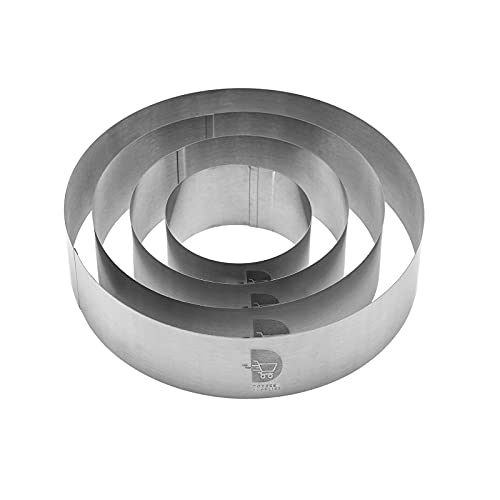
The best entremet ring mold set for mousse cakes is a seamless stainless-steel set with several diameters, at least two height options, and rings tall enough to contain both the mousse and its insert without forcing the cake above the rim.
For most home pastry kitchens, the most useful combination is a set of 18 cm, 20 cm, and 22 cm diameter rings in 4.5–5 cm height, plus one 16 cm insert ring and a freezer-safe tray or acetate-compatible base. A professional kitchen may prefer separate 6 cm and 8 cm tall rings, while occasional bakers can save money with a smaller 16–20 cm nesting set.
As an Amazon Associate we earn from qualifying purchases at no extra cost to you.


What to compare before buying
Ring diameter and finished cake size
Diameter determines more than the cake’s appearance. It changes the amount of mousse required, the size of the insert, the number of servings, and the space needed in a freezer. A 16 cm cake is compact and relatively tall-looking; a 22 cm cake creates thinner layers when the same quantity of mousse is used.
| Ring diameter | Approximate surface area | Typical servings | Useful insert diameter | Best use |
|---|---|---|---|---|
| 14 cm | 154 cm² | 4–6 | 10–11 cm | Small test cakes and individual celebrations |
| 16 cm | 201 cm² | 6–8 | 11–13 cm | Compact home entremets |
| 18 cm | 254 cm² | 8–10 | 13–15 cm | Most versatile home size |
| 20 cm | 314 cm² | 10–12 | 15–17 cm | Large family cakes |
| 22 cm | 380 cm² | 12–16 | 17–19 cm | Party-sized cakes |
The insert should usually be 2–4 cm smaller in diameter than the outer ring. That leaves enough mousse around the insert to stabilize it and prevents the fruit gel, crémeux, or frozen brownie layer from touching the mold wall.
Height options
A 4.5–5 cm ring suits a classic entremet with a biscuit base, insert, mousse, and a thin glaze or spray finish. It is also easier to fit into a domestic freezer drawer. A 6 cm ring gives more room for dramatic layered designs, but it requires more mousse and often a deeper storage container.
Very short rings, around 3 cm, work for individual petits gâteaux and thin modern desserts but leave little room for an insert. Very tall rings, around 8 cm, are useful for professional production and multi-layer cakes, yet they can make unmolding difficult if the mousse has not frozen completely.
If a set includes only one height, choose 5 cm. If it offers interchangeable rings, a 5 cm and 6 cm pairing is more useful than several nearly identical diameters.
Stainless-steel quality
Look for food-contact stainless steel described as 304 or 18/8 stainless steel. The designation is more informative than a vague “premium steel” label because it indicates a corrosion-resistant austenitic steel commonly used for cookware and pastry equipment.
- 304 or 18/8 stainless steel: the preferred choice for mousse cakes, acidic fruit inserts, and repeated washing.
- Thick, rigid walls: usually stay round when pressed into a frozen cake or moved between trays.
- Magnetic stainless steel: not automatically better; magnetism depends on the steel grade and manufacturing process.
- Uncoated metal: preferable for freezer use because coatings can scratch, chip, or become difficult to clean.
- Rounded or polished edges: safer to handle and less likely to tear acetate or parchment.
Thickness is rarely listed consistently, but a ring that flexes noticeably when squeezed is a poor choice for precise entremet work. Rigid walls matter when you are pouring warm mousse around a frozen insert: even a small change in diameter can create an uneven outer layer.
Seam construction
A seamless ring is the easiest option for smooth mousse cakes. The inner wall has no ridge to catch mousse, glaze, or fruit purée, and frozen cakes release with less scraping. However, “seamless” should describe the interior surface, not merely the outside appearance.
Welded rings can be excellent when the weld is ground smooth and polished. A folded or crimped seam may be cheaper, but it can collect residue and leave a faint vertical mark on the cake. Riveted joints are generally less desirable for mousse because their internal edges interfere with acetate and cleaning.
Inspect the rim as well as the wall. A slightly uneven top edge can make a cake appear slanted, while a sharp edge can cut acetate strips or fingers. The best construction has a continuous interior wall, a level rim, and no exposed gap where fruit or chocolate can lodg
Frequently asked questions
Which entremet ring set is most suitable for a home pastry kitchen?
For most home pastry kitchens, a seamless stainless-steel set with several diameters, at least two height options, and rings tall enough for the mousse and insert is most suitable. The article identifies 18 cm, 20 cm, and 22 cm rings in 4.5–5 cm height as a useful combination, along with a 16 cm insert ring and a freezer-safe tray or acetate-compatible base.
How much smaller should the insert be than the outer ring?
The insert should usually be 2–4 cm smaller in diameter than the outer ring. This leaves enough mousse around the insert to stabilize it and helps prevent a fruit gel, crémeux, or frozen brownie layer from touching the mold wall. For example, a 20 cm outer ring typically pairs with a useful insert diameter of 15–17 cm.
Can these rings be used for cakes with different layer heights?
Yes. A 4.5–5 cm ring suits a classic entremet containing a biscuit base, insert, mousse, and a thin glaze or spray finish. A 6 cm ring provides more room for layered designs, while an 8 cm ring is useful for professional production and multi-layer cakes. If a set offers interchangeable rings, a 5 cm and 6 cm pairing is especially useful.
What should a buyer look for when checking a ring’s interior and rim?
Look for a continuous interior wall, a level rim, and no exposed gap where fruit or chocolate can lodge. A seamless interior helps prevent mousse, glaze, or fruit purée from catching. Rounded or polished edges are safer to handle and less likely to tear acetate or parchment, while a sharp edge may cut acetate strips or fingers.
Are adjustable rings a good option for mousse cakes?
Adjustable rings can accommodate cakes from 6 to 12 inches, making them flexible for different finished sizes. However, the article emphasizes that diameter affects mousse quantity, insert size, servings, and freezer space. Fixed rings may therefore be preferable when you want predictable dimensions, while adjustable designs can suit bakers who need a range of cake sizes.