The best laser distance measures for accurate layouts are the Leica DISTO X6 for demanding renovation and workshop work, the Leica DISTO D2 for compact everyday measuring, the Bosch GLM 50-27 C for affordable indoor layouts, and the Hilti PD-E when long range and job-site durability matter most.
A laser measure is useful for more than checking whether a desk will fit beside a wall. It can help plan a gaming-room renovation, calculate cable-run lengths, position wall-mounted displays, measure acoustic-panel spacing, or lay out a custom PC workbench. The right choice depends less on the maximum number printed on the box and more on visibility, accuracy at your working distance, indirect-measurement modes, durability, and whether an app will save your measurements in a usable plan.
As an Amazon Associate we earn from qualifying purchases at no extra cost to you.


Our Top Picks
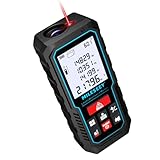
 BOSCH GLM100-23 100 Ft Blaze Laser Distance Measure17"3.9 x 1.7 x 0.9 Inches0.2 poundsCheck on Amazon
 Bosch GLM165-40 Blaze™ Pro 165 Ft. Laser Measure1625"1.63 x 1 x 4.13 Inches0.41 PoundsCheck on Amazon


Top 3 picks at a glance
Best laser distance measures at a glance
| Model | Typical range | Typical accuracy | Best use | App connectivity |
|---|---|---|---|---|
| Leica DISTO X6 | Up to about 150 m | Approximately ±1 mm | Professional layouts, bright or difficult sites | Bluetooth; DISTO Plan support |
| Leica DISTO D2 | Up to about 100 m | Approximately ±1.5 mm | Compact indoor measuring and room plans | Bluetooth; DISTO Plan support |
| Bosch GLM 50-27 C | Up to about 50 m | Approximately ±1.5 mm | General room, furniture, and PC-room layouts | Bluetooth; MeasureOn support |
| Hilti PD-E | Up to about 200 m | Approximately ±1 mm | Long outdoor measurements and construction work | Model-dependent; check the exact version |
Published range and accuracy depend on the surface, lighting, temperature, and measurement conditions. Reflective, transparent, very dark, or highly textured targets can perform differently from a matte wall at moderate indoor distance.
Head-to-head comparison
Leica DISTO X6: best overall for demanding layouts
The DISTO X6 is the strongest choice when measurements need to remain dependable across large rooms, workshops, construction areas, and partially outdoor spaces. It combines long range with approximately millimetre-level accuracy, a bright point finder, a rugged housing, and features designed to make difficult targets easier to measure.
Its most useful advantage is not simply the headline range. A digital viewfinder helps you identify the laser point when ambient light makes the dot difficult to see. That matters when measuring across a bright garage, through a window opening, or toward a distant wall. The device also supports indirect measurements and Bluetooth transfer to Leica’s DISTO Plan ecosystem, allowing measurements to become room sketches or documented plans rather than isolated numbers.
Choose it if you regularly measure above head height, across large spaces, or in dusty and demanding environments. It is more instrument than occasional gadget, so it is difficult to justify if your longest indoor measurement is only a few metres.
Leica DISTO D2: best compact option with useful smart features
The DISTO D2 is a practical middle ground. It is small enough to keep in a tool pouch or desk drawer, yet offers substantially more than a basic one-button laser. It supports Bluetooth data transfer, area and volume calculations, continuous measurement, and indirect functions on suitable versions.
For a gaming room, it is especially convenient when you are measuring wall-to-wall distance, desk depth, monitor-arm clearance, shelving, or the length of a cable route. The device is generally most comfortable indoors, where its range and point visibility are more than sufficient. Leica’s app support can reduce transcription mistakes when measurements must be placed into a sketch.
Pick the D2 when portability and measurement quality matter more than extreme ruggedness. If you need a viewfinder for bright conditions or frequently work outdoors, the X6 is the more capable upgrade.
Bosch GLM 50-27 C: best value for indoor room layouts
The Bosch GLM 50-27 C is a strong choice for homeowners, PC builders, installers, and makers who mainly measure indoors. Its approximately 50-metre range covers most bedrooms, offices, studios, workshops, and living rooms, while its accuracy is suitable for furniture placement, wall layouts, shelving, and cable planning.
The color display is easier to read than a basic monochrome screen, and the unit is designed to tolerate ordinary job-site abuse. Bluetooth connectivity works with Bosch’s MeasureOn workflow, which is useful for organizing dimensions by room or project instead of leaving a pile of handwritten notes.
Its limitation is target visibility in bright environments. A 50-metre specification does not mean the laser dot will be easy to identify at that distance in sunlight. For indoor use, this is rarely a serious issue; for outdoor building layouts, choose a model with a stronger viewfinder or a more specialized optical system.
Hilti PD-E: best for long-range construction work
The Hilti PD-E is aimed at professional users who need long measuring distances, robust construction, and advanced functions such as indirect height and clearance measurements. Its range can reach roughly 200 metres under favorable conditions, making it more appropriate for building exteriors, large workshops, and construction layouts than for ordinary room planning.
It is a sensible choice when the cost of a missed or repeated measurement is high. The trade-off is price and size: professional long-range instruments usually cost substantially more than compact indoor models, and app features may vary by exact model and regional package. Confirm the connectivity and documentation workflow before buying if digital plans are central to your work.
What matters beyond the specification sheet
Range is conditional, not absolute
Maximum range is normally measured against a favorable target with good alignment and suitable light. A white painted wall is easier than black acoustic foam, a glossy screen, glass, or a rough unfinished surface. For a room layout, a 50-metre model is usually enough. For outdoor or brightly lit work, prioritize a digital viewfinder, target plate, or stronger optical assistance over a larger theoretical number.
Accuracy should match the task
An error of 1.5 mm is insignificant when deciding whether a 1,200 mm desk fits a 1,180 mm alcove only if you also account for skirting boards, cable clearance, and wall irregularity. For cabinetry, rail systems, wall-mounted monitors, and multiple adjoining measurements, small errors can accumulate.
For example, suppose a desk is designed to fit between two measured walls: 1,842 mm and 1,846 mm. If each measurement may be off by ±1.5 mm, the worst-case difference between the two readings can be about 3 mm. That is enough to affect a tight-fit top or fixed shelving. Add a practical installation allowance of 5–10 mm unless the design specifically requires a precise built-in fit.
Indirect modes are useful, but geometry matters
Indirect measurement uses a right-triangle calculation when you cannot point the laser directly at the desired endpoint. The classic example is measuring wall height from the floor.
Place the device at a known horizontal distance from the wall and aim at the upper point. If the sloping measurement is 4.20 m and the horizontal distance is 3.00 m, the height above the device is:
Height = √(4.20² − 3.00²) = √(17.64 − 9.00) = √8.64 ≈ 2.94 m.
If the device is 1.10 m above the floor, the wall height is approximately 4.04 m. Keep the instrument steady and level; a small angle error can produce a much larger height error than the advertised distance accuracy. Models with an electronic tilt sensor make this process easier.
Ruggedness affects long-term accuracy
Look for an ingress-protection rating, protected buttons, a recessed display, and a casing designed for drops. A rugged rating does not make the laser indestructible. Keep the lens clean, avoid storing the tool loose with metal hardware, and check its calibration if it has suffered a significant impact or begins producing inconsistent readings.
App connectivity is valuable when documentation matters
Bluetooth is most useful when you are measuring many points rather than one distance. It can reduce number-transcription errors and let you attach dimensions to a room sketch. Leica DISTO Plan and Bosch MeasureOn are examples of workflows that connect compatible devices to mobile planning tools.
Before choosing, check whether the app supports your phone or tablet, exports in the format you need, and stores measurements locally or through an account. For a single desk measurement, app connectivity adds little. For a room renovation or custom workbench, it can save considerable time.
Decision matrix for common buyers
| Your situation | Recommended class | Why |
|---|---|---|
| PC desk, monitor arm, shelves, and room dimensions | Bosch GLM 50-27 C or Leica DISTO D2 | Indoor range, compact size, and enough accuracy |
| Detailed room plans with many measurements | Bluetooth model with app support | Reduces transcription and organizes dimensions |
| Bright garage, workshop entrance, or outdoor layout | Model with digital viewfinder | Makes the target point visible when the laser dot disappears |
| Construction, large buildings, or repeated professional use | Leica DISTO X6 or Hilti PD-E | Longer range, ruggedness, and advanced indirect functions |
| Occasional measurements on a tight budget | Basic 30–50 m indoor laser measure | Avoids paying for connectivity and long-range optics you will not use |
How to get more accurate layouts
- Choose the reference edge first. Decide whether the measurement starts at the front, rear, or end of the instrument. Selecting the wrong reference can create a consistent offset in every dimension.
- Clean the lens and use a stable target. Aim at a matte wall, card, or target plate rather than glass or a glossy monitor.
- Take two or three readings. If results differ noticeably, inspect alignment, surface texture, and movement instead of averaging blindly.
- Use the same reference direction throughout. Measure all room walls clockwise from a defined corner so the resulting plan is internally consistent.
- Record clearances separately. Measure the usable opening, skirting-board interference, door swing, power outlets, and cable paths rather than treating one wall-to-wall number as the whole design.
- Add an installation tolerance. For a removable desk or shelf, allow space for uneven walls and fitting. Precision in the measurement does not remove irregularity in the building.
Which best laser distance measure should you buy?
For most indoor gaming-room and workshop layouts, the Bosch GLM 50-27 C offers the best balance of price, range, readability, and app support. Choose the Leica DISTO D2 if you want a smaller instrument and a more polished measurement workflow. Move to the Leica DISTO X6 when visibility, ruggedness, and difficult targets matter more than compactness. Choose the Hilti PD-E for professional long-range work where a durable, highly capable instrument can justify a much higher general market price.
Frequently asked questions
Can a laser distance measure help plan a gaming-room layout?
Yes, it can help measure wall-to-wall distance, desk depth, monitor-arm clearance, shelving, and cable routes. For a room layout, a model with a range of about 50 metres is usually sufficient. App connectivity can also help place measurements into a room sketch and reduce transcription mistakes.
How can I make sure a desk will fit in a tight space?
Measure the space carefully and allow for more than the nominal desk width. Wall irregularities, skirting boards, and cable clearance can affect the fit, and measurement errors can add up across readings. The article recommends adding a practical installation allowance of 5–10 mm unless the design calls for a precise built-in fit.
Will a laser measure work on glass or dark acoustic panels?
It may not perform as well on those surfaces as on a matte wall. Reflective, transparent, very dark, or highly textured targets can affect measurement performance, as can lighting and other conditions. For difficult targets, consider using a target plate or a model with optical assistance.
How do I use an indirect measurement to find wall height?
Use the device’s right-triangle calculation when you cannot aim directly at the endpoint. Keep the instrument steady and level, and use an electronic tilt sensor if available. A small angle error can create a much larger height error than the distance accuracy specification suggests.
What should I do if my laser measure is dropped?
Check its readings for consistency and consider checking calibration after a significant impact. A rugged rating does not make the instrument indestructible. Keeping the lens clean and avoiding loose storage with metal hardware can also help protect the tool.