Our Top Picks
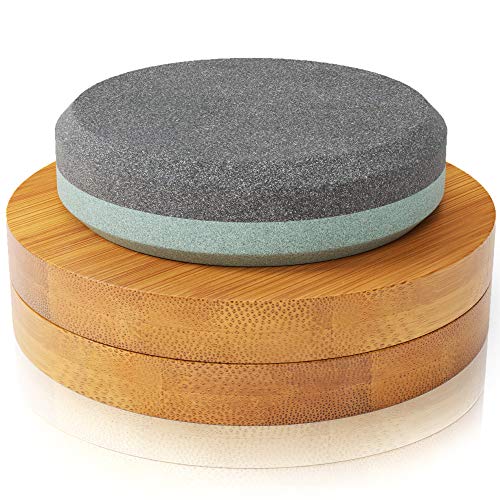
 NedFoss Axe/Hatchet Sharpening Puck Whetstone Knife Sharpening Stone3.15 x 3.15 x 1 inches0.6 poundsCheck on Amazon


Top 3 picks at a glance
Best Japanese Whetstones for Machetes and Axes
The best Japanese whetstones for machetes and axes are a durable coarse stone in the 220–500 grit range, a medium stone around 800–1,200 grit, and—only when needed—a finishing stone from 2,000–3,000 grit. For large, heavily used blades, stone size, wear resistance, and sharpening speed matter more than an ultra-fine polish.
Quick recommendations
- Best all-round setup: Shapton Glass 500 HR plus Shapton Glass 1000 or 2000. These are relatively hard, splash-and-go stones that resist dishing and suit frequent field-tool maintenance.
- Best for damaged or very blunt edges: Suehiro Cerax 320 or Naniwa Professional 400, followed by a 800–1,000 grit stone.
- Best traditional soaking option: King Deluxe 1000, paired with a King 300 or another coarse Japanese stone. It is economical, but softer and slower-wearing than premium stones.
- Best controlled progression: Naniwa Professional 400, 800, and 2,000. This sequence gives a fast repair stage, a practical working edge, and a smoother finish without unnecessary polishing.
What large blades need from a whetstone
A machete or axe removes much more steel than a kitchen knife. Its edge may also contain dents, rolled sections, rust damage, or a deliberately convex bevel. A small, soft stone can still sharpen one of these tools, but it will dish quickly and make it difficult to maintain a consistent angle across the full edge.
As an Amazon Associate we earn from qualifying purchases at no extra cost to you.


For this reason, prioritize a stone at least 200 mm long and preferably 60–75 mm wide. A wider surface gives more usable contact for a machete, while a longer stone reduces the number of strokes needed to cover an axe edge. A sturdy non-slip base is important because pressing a large blade into a loose stone can cause the stone to shift or crack.
| Blade condition and use | Starting grit | Useful next grit | Recommended finish |
|---|---|---|---|
| Chips, deep dents, or a completely damaged edge | 220–400 | 800–1,000 | Stop at 800–1,000 for a working tool |
| Blunt but intact machete or axe | 400–600 | 1,000–1,500 | 1,000–2,000 |
| Routine maintenance and light dulling | 800–1,000 | 1,500–2,000 | Optional 2,000–3,000 |
| Small touch-up on a clean edge | 1,000–1,500 | 2,000 | 2,000–3,000 |
Grit progression: how far should you go?
Coarse stones: 220–500 grit
Use coarse stones to establish a new bevel, remove a rolled edge, or repair small chips. A 220–320 grit stone is appropriate when substantial metal must be removed, but it leaves deep scratches and should not be used for routine touch-ups. A 400–500 grit stone is slower on serious damage but more versatile for machetes and axes because it removes steel quickly without being unnecessarily aggressive.
Do not remain on a coarse stone after the bevel is established. The practical stopping point is a continuous burr along the opposite side of the edge. On a long machete, check this in several sections rather than assuming the heel and tip match the middle.
Medium stones: 800–1,200 grit
This is the most useful range for working tools. It removes the deep scratches from a repair stone and leaves teeth that can bite into wood, vegetation, and fibrous material. For many axes and machetes, a 1,000-grit finish is more useful than a mirror polish because it balances sharpness with edge traction.
King Deluxe 1000 is a familiar soaking-stone choice, while Shapton Glass 1000 and Naniwa Professional 800 or 1,000 offer harder, more compact alternatives. The choice is less about brand prestige than whether you prefer a softer stone with tactile feedback or a harder stone that stays flatter and works quickly.
Fine stones: 1,500–3,000 grit
A 2,000–3,000 grit stone can refine an axe or machete edge for smoother cuts and easier maintenance. It is useful for carving axes, clean chopping, and users who want a less toothy edge. It is not compulsory for a brush machete or a heavily abused splitting axe. Extra polishing also consumes time and may reduce the aggressive bite that helps an edge start a cut.
Hard versus soft Japanese stones
Hard stones, including Shapton Glass HR and many Naniwa Professional stones, resist dishing and are convenient when sharpening broad edges. They usually need less flattening, but they provide less of the soft, cushioned feel that some people prefer. Use light pressure once the bevel is close, especially on a thin machete.
Softer stones, such as many King Deluxe and Suehiro Cerax stones, release abrasive more readily. They can sharpen quickly and make it easy to feel the edge, but a large blade can create a hollow in the stone surprisingly fast. They require more frequent flattening and should not be left submerged indefinitely unless the manufacturer specifically allows it.
Hardness is not the same as sharpening quality. A soft stone may be the better choice for a damaged edge because it cuts predictably and gives clear feedback. A hard stone is usually better when durability, clean handling, and flatness are the priority.
Soaking and splash-and-go requirements
- Shapton Glass: generally splash-and-go. Wet the surface, wait briefly for an even film of water, and begin sharpening. Do not store it in water.
- Naniwa Professional: generally splash-and-go, although a short wetting period helps the surface work consistently. Avoid prolonged soaking.
- Suehiro Cerax: commonly benefits from soaking for several minutes, but follow the instructions for the exact grit and model. Allow it to dry thoroughly after use.
- King Deluxe: a soaking stone. Give it enough time to absorb water before sharpening, and keep the surface wet while working.
Never move a soaked stone directly from cold water into strong heat or leave it where one side dries much faster than the other. Uneven drying increases cracking risk. Dry it in moving air away from direct sunlight, and flatten it before the stone becomes visibly hollow.
Choose by situation
| Your situation | Best stone type | Suggested progression | Why |
|---|---|---|---|
| Weekly machete maintenance | Hard splash-and-go stones | 500 → 1,000 or 2,000 | Fast setup and good resistance to dishing |
| Occasional axe restoration | Medium-hard coarse and medium stones | 400 → 1,000 | Enough removal without buying a very abrasive repair system |
| Large chips or axe-bit damage | Dedicated coarse stone | 220–320 → 800 → 1,000 | Reduces time spent grinding damaged steel by hand |
| Traditional low-cost setup | Soaking stones | King 300 → King Deluxe 1000 | Affordable, forgiving feedback, but more maintenance |
| Carving axe or polished camp tool | Hard medium and fine stones | 800–1,000 → 2,000 → 3,000 | Produces a smoother edge without starting at an unnecessarily coarse grit |
How to sharpen a machete or axe on Japanese stones
- Inspect and clean the edge. Remove dirt, sap, and loose rust. If there are deep chips, mark the damaged section so you do not stop early.
- Secure the stone. Place it in a stable holder on a non-slip mat. A large blade needs two-handed control, so the stone must not slide.
- Set the bevel. Most axes use a primary bevel around 20–30 degrees per side, depending on the pattern and job. A machete may use roughly 15–25 degrees per side. Preserve a convex profile on chopping tools rather than forcing the entire bevel flat.
- Work in sections. Divide a long edge into heel, middle, and tip. Use overlapping strokes and maintain the same angle as you move between sections.
- Raise a burr. Continue on the coarse or medium stone until a small, continuous burr can be felt along the opposite side. If it appears only in one section, that section has received most of the sharpening.
- Progress only after the edge is even. Move to the next grit when the burr is continuous and the coarse scratches are reasonably consistent. A finer stone cannot efficiently repair an unfinished bevel.
- Deburr lightly. Alternate a few light strokes per side on the final stone. Excessive pressure can fold the edge instead of removing the burr.
- Finish and protect. Dry the blade, inspect for remaining wire edge, and apply a thin protective oil suitable for the tool and storage conditions.
Durability and maintenance
Expect a coarse stone to wear faster than a fine stone, particularly when repairing wide axe bevels. Flattening is part of ownership, not an optional correction. A diamond flattening plate or coarse lapping stone is useful; check the stone with a straightedge and flatten whenever a hollow becomes visible or strokes begin contacting only the ends.
For a two-stone setup, a 400–500 grit hard stone plus a 1,000–2,000 grit hard stone is the most balanced choice. Add a 220–320 grit stone only if you regularly repair chips or badly neglected tools. That arrangement avoids spending money on a fine stone that cannot compensate for an incomplete coarse-stage bevel.
Frequently asked questions
Can I sharpen an axe with a convex edge on a flat whetstone?
Yes, but preserve the convex profile rather than forcing the entire bevel flat. Work in sections and keep the blade’s existing shape as you sharpen. A stable holder and non-slip mat help prevent the stone from shifting while you control the large blade.
How can I tell whether I have sharpened the whole edge evenly?
Check for a continuous burr along the opposite side of the edge, including at the heel, middle, and tip. On a long machete, inspect these sections separately rather than assuming they match. If the burr appears only in one section, give the other sections more attention before moving to a finer stone.
Should I use the same sharpening angle for an axe and a machete?
No; the article gives different typical bevel ranges. Most axes use around 20–30 degrees per side, while a machete may use roughly 15–25 degrees per side. Preserve the tool’s existing profile, particularly a convex profile on chopping tools, rather than flattening the whole bevel.
How should I dry a soaking whetstone after sharpening?
Let it dry thoroughly in moving air, away from direct sunlight. Avoid moving a soaked stone directly from cold water into strong heat, and avoid letting one side dry much faster than the other, since uneven drying increases the risk of cracking. Follow the instructions for the specific stone model.
Do I need a separate flattening tool for Japanese whetstones?
A diamond flattening plate or coarse lapping stone is useful for keeping a whetstone flat. Check the stone with a straightedge, and flatten it when a hollow becomes visible or strokes begin contacting only the ends. Coarse stones can wear faster, especially when repairing wide axe bevels.
Final verdict
For most owners, the best Japanese whetstones for machetes and axes are a hard 400–500 grit stone and a hard 1,000–2,000 grit stone, with Shapton Glass HR and Naniwa Professional offering convenient splash-and-go options. Choose Suehiro Cerax or King Deluxe when you value softer feedback and lower initial cost, but plan for soaking and more frequent flattening. Stop at 1,000 grit for a durable working edge, and go to 2,000–3,000 only when the blade’s job benefits from a smoother finish.