Prebuilt gaming PC prices are not fixed. The same tower can swing $150–300 depending on the week you buy it, because system integrators clear inventory around predictable retail calendars and new hardware launches. If you are flexible on timing, understanding that rhythm is the single easiest way to get more GPU for your money without touching a screwdriver.
Our Top Picks
Pros & cons
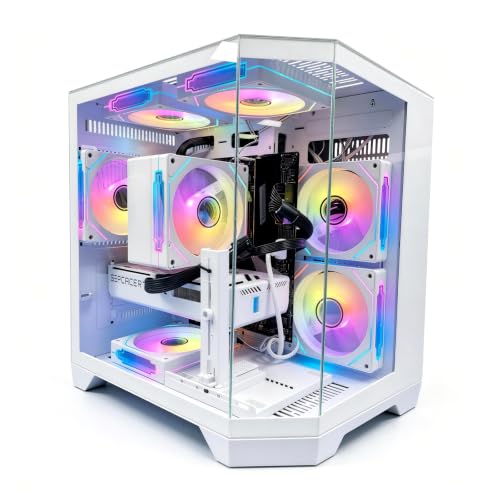
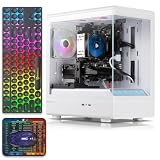
- Built-in 11.3 inch smart display shows live temps and usage
- 850W 80+ Gold PSU leaves headroom for upgrades
- Arrives fully assembled with Windows 11 Home installed
- Monitor must connect to the graphics card, not motherboard ports
- 360mm liquid cooler takes up significant case space




Top 3 picks at a glance
Why prebuilt prices move
Three forces set the price of any prebuilt: component cost (mostly the GPU), builder margin, and inventory pressure. When a builder has a warehouse full of last-generation towers and a new GPU tier is about to land, they discount aggressively to avoid holding depreciating stock. That is why the best deals cluster around a handful of dates rather than being spread evenly across the year.
As an Amazon Associate we earn from qualifying purchases at no extra cost to you.


The calendar that actually matters
| Window | Typical discount vs. peak | Best for |
|---|---|---|
| Black Friday / Cyber Monday | 10–25% | Overall lowest prices, widest selection |
| Post-holiday clearance (Jan) | 8–18% | Leftover configs, open-box units |
| Back-to-school (Jul–Aug) | 5–15% | Mid-range 1080p/1440p towers |
| New GPU launch window | 10–30% on prior gen | Value hunters who do not need the newest card |
| Spring (Mar–Apr) | 0–8% | Worst value; avoid unless urgent |
Buy the previous generation on purpose
The most reliable discount is not a date at all — it is a product cycle. When a new graphics card tier ships, prebuilts using the outgoing tier often drop 20–30% while still delivering 90%+ of the gaming performance most people need at 1080p and 1440p. A tower built around a last-gen 70-class card at $900 frequently outvalues a same-price current-gen machine that had to cut corners elsewhere (weaker PSU, slower RAM, smaller SSD) to hit the price.
Watch the whole spec, not the headline
Discount season is exactly when builders quietly swap in a 500W no-name power supply or 8GB of single-channel RAM to protect margin. A “50% off” banner means nothing if the machine ships with parts you would never choose. Before you celebrate a price, confirm the PSU is 80+ Bronze or better and adequately sized (a 70-class GPU wants 650W+, an 80-class wants 750W+), that RAM is dual-channel 16GB minimum, and that storage is a real NVMe SSD, not a tiny boot drive plus a hard disk.
When waiting is a mistake
Timing is a bonus, not a religion. If your current machine is dead and you need to work or study now, the “cost” of buying in a slow month is maybe 5–10% — not worth weeks of downtime. Waiting also backfires when a specific config is selling out; popular sub-$1,000 towers routinely go out of stock during sales and do not return at the same price. Set a target price, and if you see it, buy.
How to shop the sale without overpaying
Track the exact model you want for two or three weeks before a sale so you know the real baseline price — retailers love to inflate a “was” number. Compare at least two builders on equivalent GPU and CPU tiers rather than trusting one brand’s marketing. And factor shipping and any bundled peripherals into the true cost; a “free” keyboard and mouse worth $20 does not offset a $60 price gap.
FAQ
Is Black Friday really the cheapest time?
For breadth of choice and the deepest average discounts, yes. But a prior-generation clearance right after a GPU launch can beat Black Friday on a specific model. The smart move is to know your target price and buy whenever it appears, whether that is November or a random Tuesday in January.
Should I wait for a brand-new GPU generation to buy?
Only if you want the newest card. If you are value-focused, the launch of a new generation is your green light to buy the outgoing one at a steep discount. Most gamers at 1080p and 1440p will not notice the difference in day-to-day play, but they will notice the $200 they saved.
Bottom line
The best time to buy a prebuilt gaming PC is during a major sale event or right after a new GPU generation makes last-year’s towers cheap — as long as the full spec sheet still holds up. Set a realistic target price, learn the true baseline, and pounce when a well-balanced machine hits it. If your PC is dead today, though, the smartest calendar is the one that gets you running again this week.