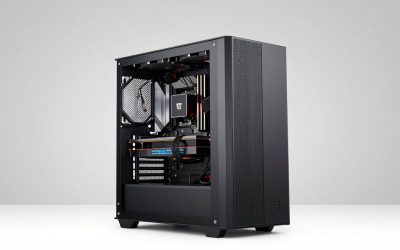
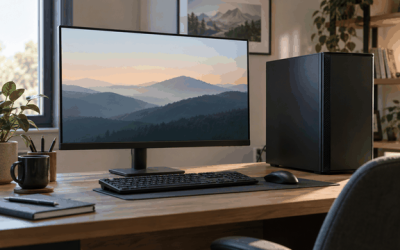
Coming from a PlayStation or Xbox, a prebuilt gaming PC is usually the smoothest on-ramp: you get a warranty, a single support line, and a machine that works out of the box while you learn the ropes. The mistake most switchers make is either overspending on specs they will not use for a year, or buying a bargain box that cannot match the console experience they are leaving. Here is how to pick a prebuilt that feels like a clear upgrade from day one.
Our Top Picks


Top 3 picks at a glance
Match the console, then beat it
Current consoles target 4K with upscaling and 60 FPS, sometimes 120 in performance modes. A prebuilt in the roughly $900–1,300 range comfortably matches that at 1440p and often exceeds it with higher frame rates and better texture settings. You do not need a $2,500 machine to feel the jump; you need a modern mid-range GPU, a 6–8 core CPU, 16GB of RAM, and a 1TB SSD.
As an Amazon Associate we earn from qualifying purchases at no extra cost to you.


| Coming from | Target resolution | Prebuilt budget | Key specs |
|---|---|---|---|
| Base current console | 1080p-1440p high FPS | $900-1,100 | Mid GPU, 6-8 core, 16GB, 1TB SSD |
| Pro/Series X owner | 1440p 100+ FPS | $1,100-1,300 | Upper-mid GPU, 8 core, 16-32GB |
| Wants 4K | 4K 60+ FPS | $1,500+ | High-end GPU, 32GB, fast NVMe |
What surprises console switchers
Storage fills fast
PC game installs are large and you will keep more games installed than on a console. Insist on at least 1TB of NVMe, and prefer prebuilts with a free M.2 slot so you can add a second drive later without cloning.
You keep your controller
Both major console controllers work on PC over USB or Bluetooth, so you do not have to learn keyboard and mouse immediately. Many switchers game with a controller for months and try mouse-and-keyboard only for competitive shooters.
Upgradability is the real win
Unlike a console, a good prebuilt lets you drop in a bigger GPU or more RAM in two years. Favor models that use standard ATX parts and a standard power supply rather than proprietary boards, so future upgrades are simple and cheap.
What changes about how you play
Beyond raw specs, switchers should expect a few habits to change. Games arrive as digital downloads that you buy from several stores rather than one console marketplace, which means more choice and more frequent sales but also a bit more account juggling. Settings menus are far deeper than a console’s, letting you dial in resolution, frame rate, and quality per game; that flexibility is a gift once you learn it, and a source of early confusion if you do not. Budget an afternoon to update drivers and tune a couple of favorite games, and the PC quickly feels smoother than the console it replaced.
Peripherals and the display
A prebuilt is only as good as the screen you attach. If you are moving from a living-room TV, a 1440p 144Hz monitor will reveal the higher frame rates the PC produces in a way a 60Hz TV never could, and it is often the single most impactful purchase after the PC itself. Factor a monitor, a decent keyboard and mouse, and possibly a headset into the total budget so the experience matches the machine. Many switchers underspend here and then wonder why the upgrade feels underwhelming.
The two-year upgrade mindset
Treat the prebuilt as a platform rather than a fixed appliance. In roughly two to three years, a single GPU upgrade can rejuvenate the whole machine for a fraction of a new PC’s cost, provided you chose a model with a standard power supply and case clearance for a larger card. Keeping that upgrade path open is the console-to-PC advantage that pays off long after the initial purchase, so weigh it heavily when comparing otherwise similar prebuilts.
Frequently asked questions
Do I need a 4K PC to beat my console?
No. A $900–1,100 prebuilt playing at 1440p with high frame rates already looks and feels better than base-console 4K-with-upscaling, thanks to higher FPS and better settings. Chase 4K only if you have a 4K high-refresh display and the budget for a high-end GPU.
Can I use my console controller on a PC?
Yes. Both major console controllers connect over USB or Bluetooth and are recognized by most PC games, so you can start with the input you already know and adopt keyboard and mouse whenever you are ready.
Bottom line
For console players making the jump, a $900–1,300 prebuilt with a modern mid-range GPU, an 8-core CPU, 16GB of RAM, and 1TB of NVMe is the sweet spot: it clearly beats the console at 1440p, keeps your controller, and, if it uses standard parts, gives you the upgrade path a console never could.