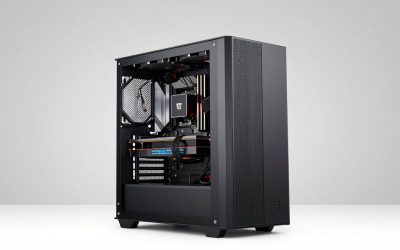
Heavily modded Minecraft and Skyrim break the usual gaming PC advice. These games do not just want a big GPU; they hammer the CPU and devour RAM as mod counts climb. A build tuned for 300-plus mods looks different from a standard 1440p gaming rig, and getting the balance right is the difference between smooth exploration and constant stutter.
As an Amazon Associate we earn from qualifying purchases at no extra cost to you.


Our Top Picks
 ASUS Dual GeForce RTX 5060 Ti 16GB GDDR7RTX5060Ti|OC|16GB9 x 4.7 x 2 inches1.4 PoundsCheck on Amazon


Top 3 picks at a glance
Why modded games stress different parts
Vanilla Minecraft is light, but large modpacks with hundreds of mods, shaders, and big render distances lean hard on single-thread CPU performance and system RAM. Modded Skyrim with a heavy load order and 4K texture packs demands both VRAM and system memory. Both punish a build that skimped on CPU or RAM to buy a flashier GPU.
The balanced spec
Prioritize a strong modern CPU with high single-thread speed, 32 GB of RAM, and a mid-range GPU with 12 GB or more of VRAM for textured Skyrim. Fast NVMe storage cuts the long load times these games are known for.
| Component | Recommended range | Why for modded |
|---|---|---|
| CPU | 6-8 core, high single-thread | Modded Minecraft is CPU-bound |
| RAM | 32 GB DDR5 | Large packs allocate 8-16 GB alone |
| GPU | 12 GB+ VRAM mid-range | 4K textures and shaders in Skyrim |
| Storage | 1 TB NVMe SSD | Faster loads, room for mods |
| PSU | 650W 80+ Gold | Headroom for the GPU |
Where to spend and where to save
Put money in CPU and RAM
For modded Minecraft especially, a faster CPU and 32 GB of RAM matter more than the GPU tier. Java-based modpacks with shaders can still stutter on a monster GPU if the processor cannot keep up. Allocating 8-12 GB of RAM to the game leaves plenty for Windows only if you have 32 GB total.
Match the GPU to Skyrim texture goals
If your Skyrim dreams involve 4K texture overhauls and ENB lighting, a card with 12 GB or more of VRAM prevents stutter as those assets fill memory. For lighter load orders, an 8 GB card at 1080p is enough, letting you shift budget back to CPU and RAM.
Tuning the build for each game engine
Modded Minecraft and modded Skyrim stress hardware differently, so a build that nails both benefits from understanding what each engine demands and where a little extra spending pays off.
Minecraft loves clock speed and RAM allocation
Java-based modpacks are largely single-thread bound, so a CPU with high per-core speed matters more than a huge core count. Allocating 8-12 GB of RAM to the game keeps big packs with distant render distances smooth, which is only comfortable if the system has 32 GB total so Windows is not starved.
Skyrim scales with VRAM and storage
A heavily textured Skyrim load order with 4K packs and lighting mods fills VRAM quickly, so a 12 GB or larger card prevents the stutter that appears when memory overflows. Fast NVMe storage also matters because these games load enormous asset sets; a 1 TB drive gives both speed and room for a sprawling mod folder.
Do not forget cooling and headroom
Long modded sessions run the CPU and GPU hard for hours, so a capable cooler and a 650 watt 80 Plus Gold PSU with headroom keep the system stable and quiet. Modpacks that stutter on paper-spec builds often run fine once thermals and power have real margin, because sustained load, not peak load, is what these games impose.
FAQ
Is 16 GB of RAM enough for modded games?
For light modding, yes, but heavy Minecraft packs and texture-laden Skyrim can allocate 8-16 GB on their own, leaving little for the OS. 32 GB is the comfortable target that stops the disk-thrashing stutter that ruins big modpacks.
Does a faster CPU really help Minecraft more than a GPU?
In modded Java Minecraft, often yes. World generation, entity counts, and mod logic run heavily on the CPU, so single-thread speed drives frame rate. Shaders add GPU load, but a weak CPU remains the bottleneck in most large packs.
Bottom line
Build for CPU and memory first: a fast processor, 32 GB of RAM, a 12 GB-plus GPU for textured Skyrim, and a 1 TB NVMe drive. That balance handles 300-mod packs and heavy load orders smoothly, where a GPU-heavy, RAM-starved build would stutter.