A budget of around $1,500 sits in a genuinely happy place. It is enough for excellent 1440p gaming, capable content creation and years of headroom, without tipping into diminishing returns. The trick is spending it in balance rather than blowing it on one showpiece part. This guide lays out how to allocate roughly $1,500 for a machine that does a bit of everything well.
The Goal: Balance, Not a Single Star
At $1,500 you can afford a strong build in every category, so the enemy is imbalance, not a lack of money. A machine with a flagship GPU but 16GB of RAM and a weak power supply is worse than one where every part is solidly matched. The plan below spends across the whole system so nothing becomes a bottleneck and the build feels fast at everything.
Sample $1,500 Allocation
| Component | Approx. share | Target |
|---|---|---|
| GPU | $540-620 | High-end 1440p card |
| CPU | $250-300 | Strong 8-12 core |
| Motherboard | $150-180 | Solid VRMs, upgrade path |
| RAM | $90-120 | 32GB dual channel |
| Storage | $80-110 | 1-2TB NVMe Gen4 |
| PSU | $90-120 | 750W 80+ Gold |
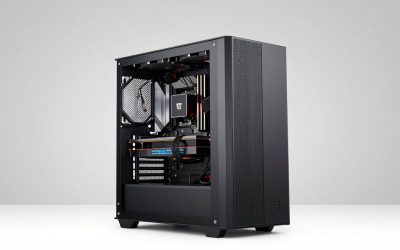
| Case + cooling | $130-170 | Airflow case, good cooler |
Where the Money Goes
The graphics card takes the largest slice because it drives both gaming performance and creative acceleration, landing around $540-620 for a high-end 1440p card. The CPU gets a healthy $250-300 for a strong eight-to-twelve-core chip that games well and handles editing exports. That pairing is the heart of the build, and the rest supports it without being starved.
Do Not Skimp on the Foundation
The supporting parts are where a $1,500 build quietly succeeds or fails. A 750W 80+ Gold power supply gives stable power and room to upgrade the GPU later. 32GB of RAM in dual channel keeps games, browsers and creative apps smooth. A 1-2TB NVMe drive delivers fast loads with room to grow. And an airflow-focused case with a good cooler keeps everything cool and quiet. None of these are glamorous, all of them matter.
What This Build Handles
Specced this way, a $1,500 machine delivers smooth 1440p 144Hz gaming, comfortably handles 4K video editing and other creative work, and leaves a clear upgrade path thanks to the generous power supply and roomy case. It is a genuine all-rounder, which is exactly what this budget should buy when the money is spread with discipline.
Where to Flex the Budget Up or Down
The allocation is a template, and real builds flex around it. If you already own a quality power supply or case, redirect that $100-150 toward the GPU or CPU and lift the whole build a tier. If prices spike on the graphics card you want, it is often smarter to hold the CPU and supporting parts steady and wait for a GPU sale than to downgrade everything to force the card into budget. The GPU and CPU pairing is the heart; protect it, and flex the trimmings.
Direction of use should guide the flex too. A creator-leaning owner can shift a little money from the GPU toward more RAM and a bigger CPU, while a pure gamer can do the reverse. A silent-build fan can push case and cooling higher at the expense of a slightly smaller storage drive to start. The $1,500 figure buys excellence in every direction; the discipline is deciding which direction matters to you and moving the dollars there on purpose.
FAQ
Should I spend more on the GPU and less elsewhere?
Only slightly, and not by starving the essentials. Pushing the GPU toward the top of its range is fine if the rest of the system still hits its targets, but dropping the RAM to 16GB or the power supply to a weak unit to fund a bigger card creates bottlenecks that undo the gain. Keep the balance.
Is $1,500 enough for 4K gaming?
It is enough for entry-level 4K in many titles, but this budget shines brightest at 1440p 144Hz. If 4K is your firm goal, expect to raise the budget toward the graphics card specifically. As a do-everything machine at 1440p with creative headroom, $1,500 is a sweet spot.
Bottom Line
At around $1,500 the winning strategy is balance: roughly $540-620 on a high-end 1440p GPU, $250-300 on a strong multi-core CPU, and the rest spread across 32GB of RAM, fast NVMe storage, a 750W Gold power supply and an airflow case. Spend it that way and you get a genuine all-rounder that games, creates and upgrades gracefully for years.